 Part 9
Part 11
Part 9
Part 11
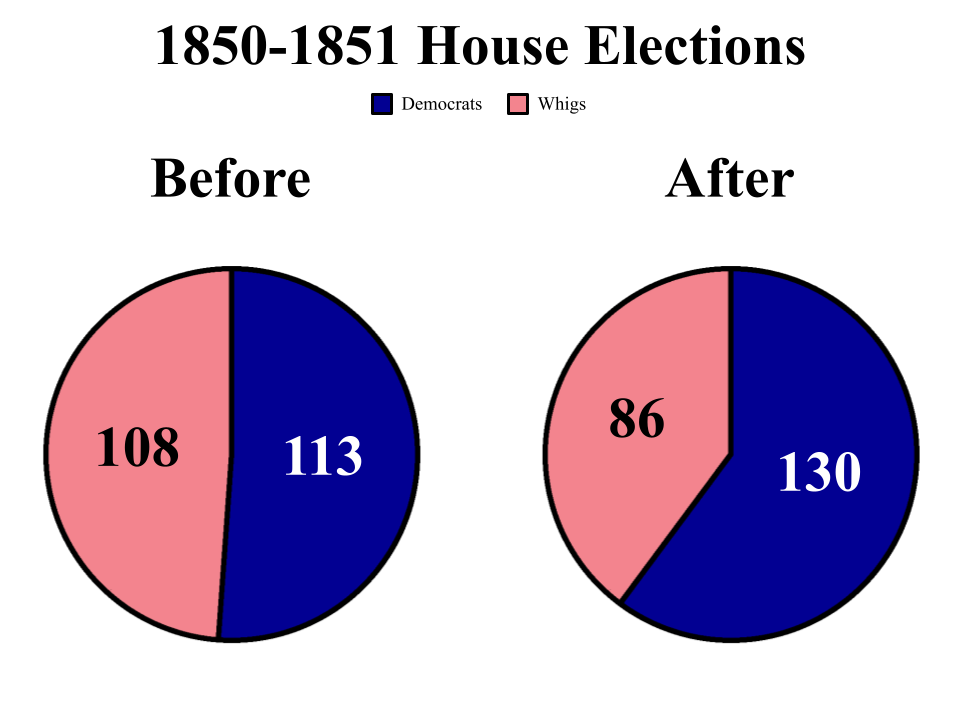
Of course, being the president entailed handling a lot more than just slavery. Unfortunately, due to Democratic majorities in both houses of congress, Fillmore wasn't able to implement a lot of important Whig policies.
However, the president has much more control over foreign affairs than domestic affairs. Because of this, foreign policy is an extremely important part of any presidency. In terms of foreign policy, Fillmore believed that every nation has the right to govern itself. Although Americans may feel bad for the oppressed in other countries, they should not interfere, because it would be wrong for America to impose its will on other nations. Overall, Fillmore favored a policy of neutrality, trying to stay friendly with every nation while avoiding getting entangled in their problems.
Since Webster was extremely old and didn't even know much about foreign policy, Fillmore ended up doing a lot of the work. Then again, Fillmore was also basically winging it. A lot of foreign policy stuff was happening during this time, but to be honest, for the most part none of it really mattered. So please enjoy these seven little foreign policy adventures.
America had a huge amount of unsettled land, and navigating the country took an extremely long time. Getting from the East coast to the West took months even if you went by sea. People wanted a way to speed it up.
There seemed like two possible ways to improve things: a railroad or a canal. A railroad could make land transportation faster, whereas a canal could seriously shorten the path by sea. Nicaragua, a relatively small country, seemed like a good place to create a canal. However, Great Britain opposed this idea, fearing that the canal would give America too much power over world trade and the Pacific Ocean. The eastern edge of the proposed canal was the San Juan River, so to stop the Americans, the British began occupying San Juan.
At the time, Zachary Taylor was the president, and his Secretary of State, John Clayton, proposed to the British that if they allowed the United States to create the canal, it would be neutral and available to all nations. Britain agreed to this, and the agreement was formalized in the Clayton-Bulwer Treaty.
The British were reassured, and Nicaragua had given America the right to make the canal, so Clayton expected the British to leave San Juan. But then they didn't for some reason.
After some time, Fillmore became the president, so now it was his problem. He felt the British had violated the Clayton-Bulwer Treaty, but at the same time, he was against war and preferred the idea of persuading the British that America was not a threat to them in Central America. The thing is, America had just annexed Texas and New Mexico and California, so unsurprisingly, the British weren't buying it.
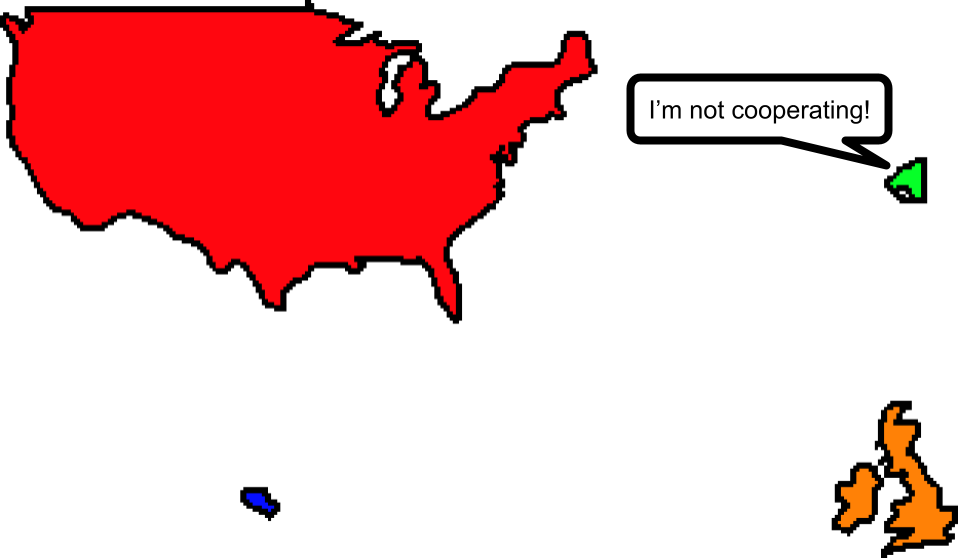
Then, suddenly, Nicaragua got into a war with Costa Rica, and the Nicaraguan government that had supported the canal was overthrown. After another incident where the British fired on an American ship at San Juan, a convention was finally held to settle the entire issue. The four attending nations were the United States, the United Kingdom, Costa Rica, and Nicaragua. Nicaragua's new government refused to cooperate, and in the long run, the canal never happened.
There were other means of connecting the Atlantic and Pacific that had been in progress even before Fillmore became president. There were plans for a railroad across the Isthmus of Tehuantepec in Mexico, and in 1842, The Mexican government gave someone the rights to make one. Eventually, he sold the charter and it ended up in the hands of an American.
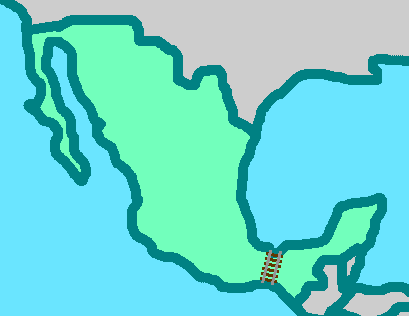
Once Fillmore became president, there were some disputes about how much control America should have over the project. But eventually, a treaty was negotiated, and it seemed things would finally move forward. But then the Mexicans were worried about American imperialism, so they backed out and said the Americans did not have the right to do it.
Judah P. Benjamin, who now held the rights to the project, encouraged Fillmore to be mean to the Mexicans to allow the railroad to happen, but Fillmore refused. As much as he wanted the railroad, he refused to go to war with Mexico over it.
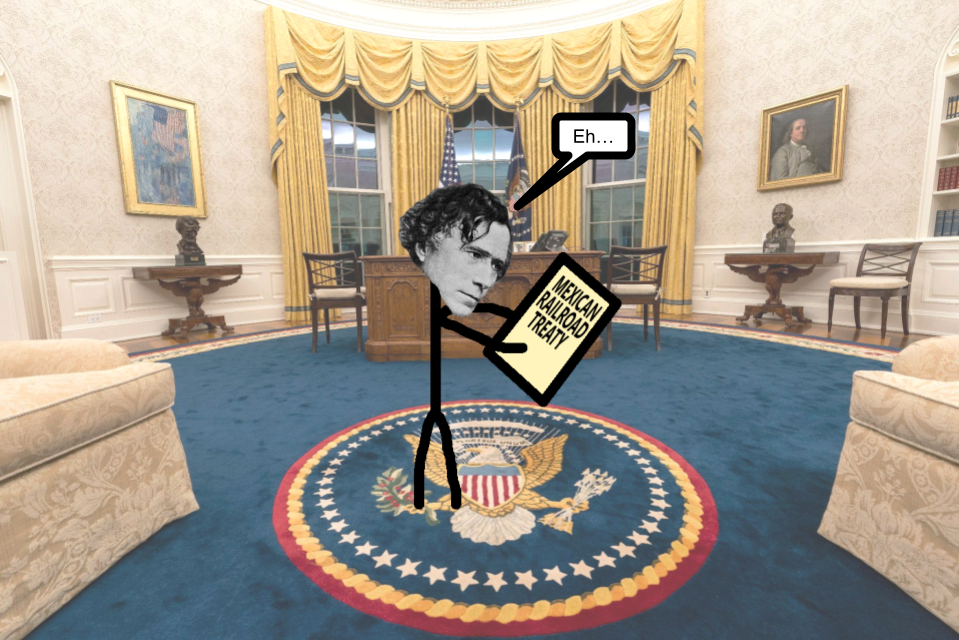
Then, Fillmore began talking with Mexican President Arista, and he was told Mexico may accept a railroad if it got better terms. A new treaty was negotiated in Mexico City, but before it arrived at Washington, Fillmore's presidency was already over. Franklin Pierce, the new president, did not submit it to the Senate for ratification for reasons we do not fully understand.
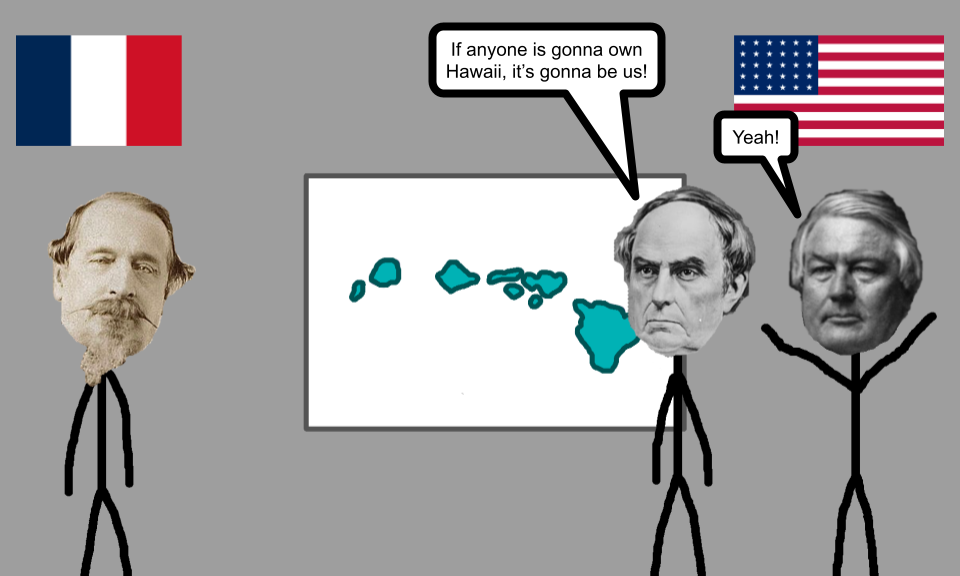
Hawaii may be known as our 50th state today, but this wasn't always the case. It was once an independent nation. The United States supported Hawaii's independence, and Britain and France specifically agreed to not annex it. Despite these agreements, Napoleon III of France invaded the island, and while he did leave, there were still rumors of another French invasion. Fearing such an invasion, the King of Hawaii tried to arrange a potential annexation by the United States, something many Americans already wanted. The plan had the caveat that the annexation would only go through if France invaded Hawaii again. Fillmore and Webster both disliked the idea, not wanting to make a secret deal like this.
Soon the king's fears were somewhat validated when M. Perrin, Napoleon's commissioner, gave a scary list of demands to Hawaii that would effectively place it under French control. Webster objected to this, saying that if Hawaii was going to be owned by anyone, it would be owned by the United States. At this point, the French gave up, and the United States did not annex Hawaii. The end.
At the time, Japan had been closed to almost all foreign trade for over 200 years. Other nations frequently asked Japan if it would change its mind, but Japan always said no. The thing is, Fillmore wanted to be able to trade with Japan since it could act as a refueling station when going to China.
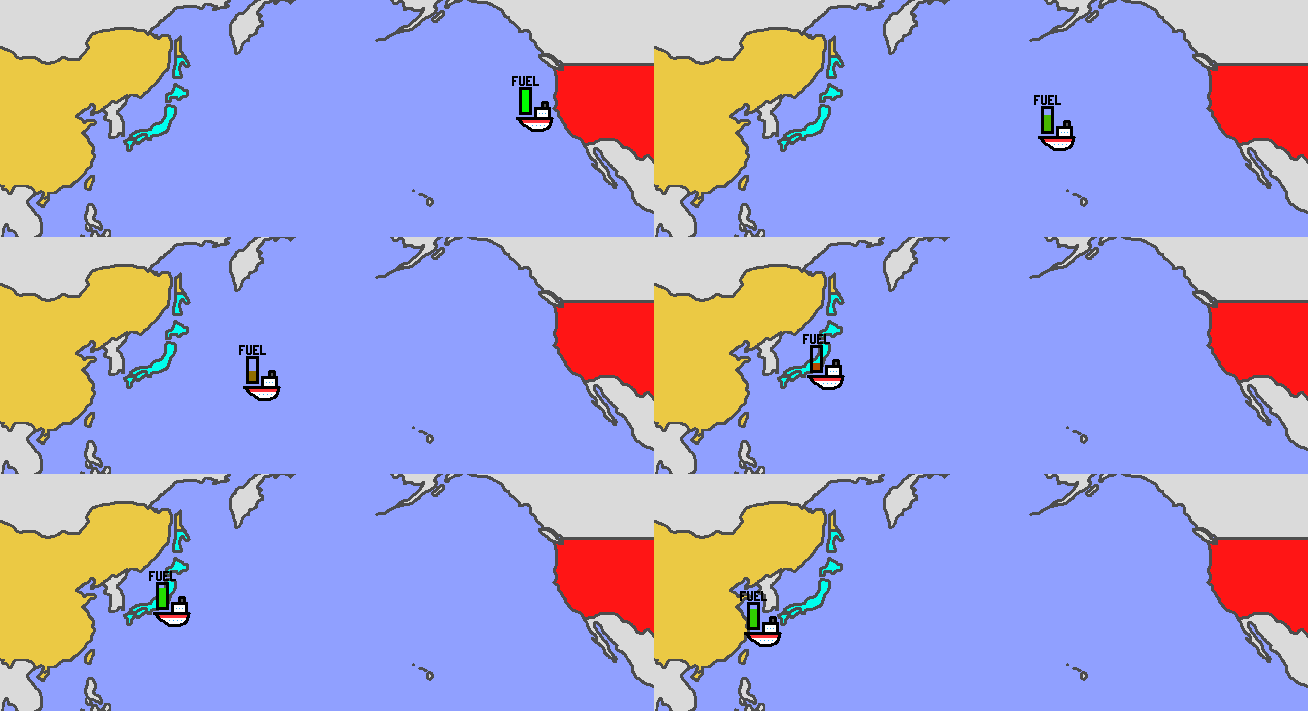
Fillmore and his new Secretary of State Edward Everett wrote a letter to the emperor of Japan calling him a "Great and good friend". From there, Fillmore sent a fleet controlled by Commodore Perry to head to Japan. Perry's goal was to get protection for shipwrecked American sailors, permission for supplies (mostly coal), and a port for commerce. Perry was also told that the part with American shipwrecks was not negotiable and that if anything bad happened to sailors, Japan would be "severely chastised".
And so Perry delivered the address to the Shogun and left promising that he would later return with a larger force. Even though Japan wanted to stay isolated, they felt it was a bad idea at this point. So the Shogun negotiated with Perry when he returned in 1854, and Perry got everything Fillmore had wanted. But by that time, Fillmore wasn't even the president anymore. Decades later, Japan attacked Pearl Harbor, plunging America into World War 2.
Bird poop, called guano, is, for some reason, a great fertilizer. Farmers wanted it at a cheaper price. Fillmore agreed, and he mentioned it in his 1850 address to congress.
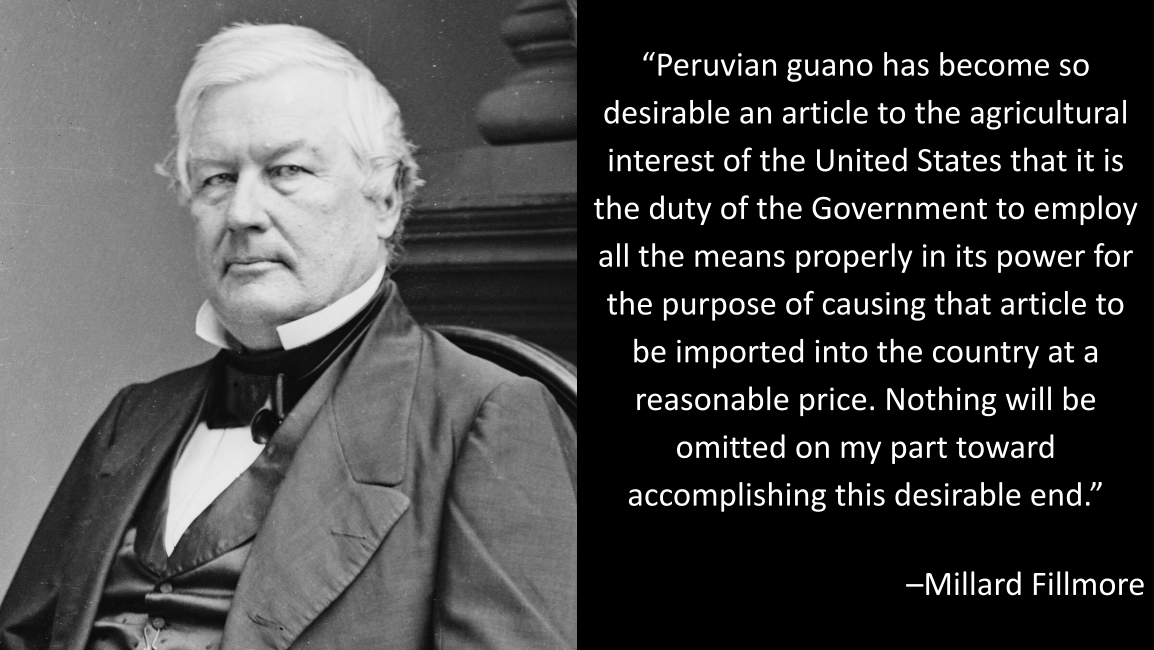
Across the coast from Peru, there were some uninhabited islands filled to the brim with guano. Peru claimed the islands, but their claims were debatable and unenforced. That is, until a revolution put a new government in place that threatened to bomb ships that tried to take guano from the islands.
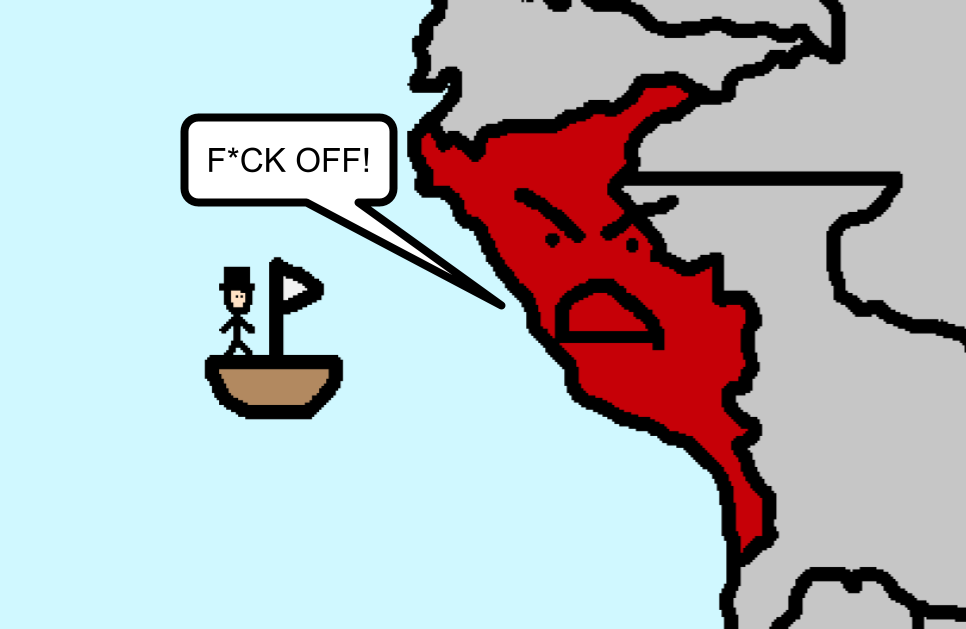
Meanwhile, in New York City a bunch of people wanted to send a hundred ships to the islands and return with an obscene amount of guano. Peru, however, was very much against this. But that didn't stop these people from preparing for the voyage anyway. A.G. Benson asked Daniel Webster if they would be protected by the American navy. Webster said yes.
But the Peruvian minister was angry, and when Fillmore heard about this, he looked into the situation. He concluded that Peru owned the islands, so they had the right to stop the American ships from taking their guano for free. What he didn't realize is that Webster, who was now dying, had promised that the American navy would protect the ships. Benson argued that if Peru wanted money, the government should have to pay them since Webster had already encouraged the journey. Peru agreed to this, and Fillmore reluctantly agreed as well because he didn't want any drama with New York merchants.
Ever since the 1800s, Americans looked at Latin America and witnessed revolution after revolution. Eventually, Cuba was one of the only places still under colonial control. Specifically, it was controlled by Spain. Cuba was important to the United States since Havana, its capital, was an important port for trade.
The problem with Cuba being controlled by Spain was that Spain was not exactly the most powerful country. It had basically spent the whole century losing its colonial territories, so it seemed possible that some other, stronger nation would take over Cuba. In addition, the Mexican-American War made many Americans support even more territorial expansion, and many viewed Cuba as a great opportunity. Southerners in particular felt it could be a new slave state.
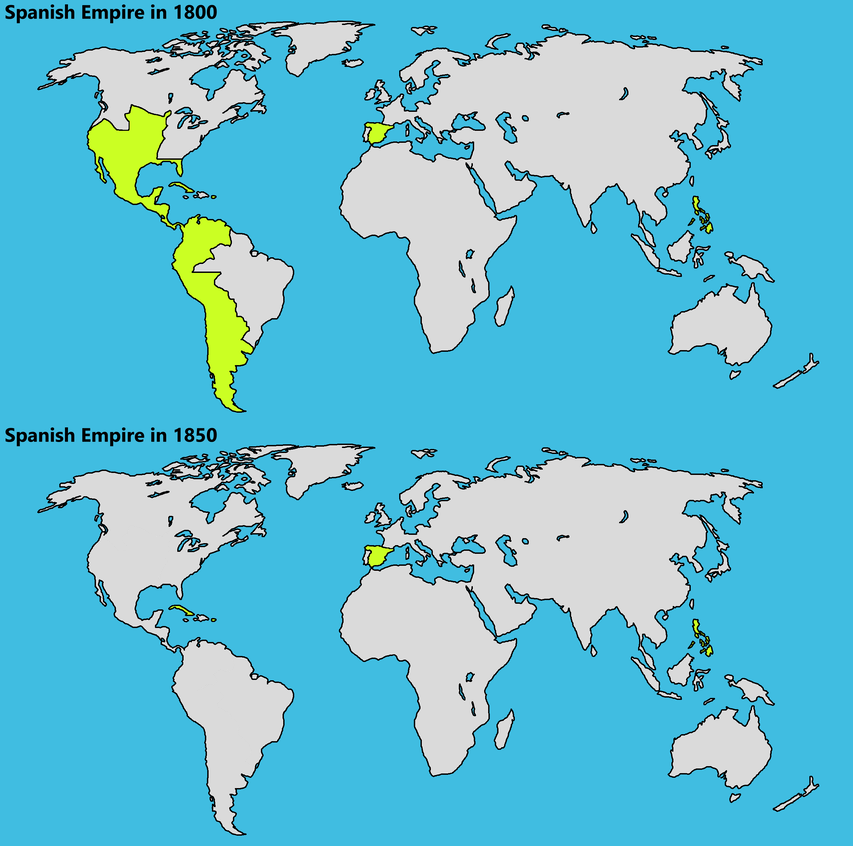
Because of this, President Polk had tried to purchase Cuba, but he failed. Some independent actors tried to take matters into their own hands. Narciso Lopez assembled a massive crew and tried to take Cuba. His first two attempts failed, and by the time of his third, Fillmore was the president.
Fillmore had no issues with territorial expansion, but he was against using violence as a means of getting it. He warned anyone plotting with Lopez that if they tried something again, there would be penalties. But then, an insurrectionary movement happened in Cuba, and the newspapers of the time exaggerated its size, so Lopez thought he had the perfect opportunity to exploit the unrest and take Cuba. He disobeyed Fillmore and left with his crew anyway.
When they arrived in Cuba, they failed spectacularly. The Spanish didn't give the invaders a fair trial, and the United States government didn't even have time to act before most of them were executed. This kind of conflict was the perfect chance to justify an invasion of Cuba, but Fillmore refused. He actually sided with Spain against the invaders.
Eventually, England proposed a treaty with France and the United States where they would all agree to never take Cuba. You may think that Fillmore would have gladly agreed to this, but no. He felt this treaty was unfair since Cuba was very close to the United States and uniquely important to its economy. He felt the United States would have been giving up a lot more than France or Britain by signing this treaty. So his new Secretary of State Edward Everett had to stop this from happening.
Everett told England that if Cuba was anyone's business, it was America's business. Fillmore concluded this adventure by telling congress there were no plans to annex Cuba. So if you're wondering why Cuba isn't the 51st state of the United States, you can partially thank Millard Fillmore for that.
1848 was a big year for revolutions in Europe. In Austria, Hungarians were mad that they were controlled by Austria, so Louis Kossuth started a revolt. In 1849, Taylor sent Dudley Mann to investigate. He was given the power to recognize Hungarian independence. Unfortunately, before Mann arrived, Kossuth's revolt had already failed. Even worse, the Austrian government got a copy of Mann's instructions and was unsurprisingly pissed that America was even thinking of supporting the revolt. Fillmore inherited this drama.
During Fillmore's presidency, some Austrian guy in Washington complained to Webster about America's actions. Webster and friends worked together to make a reply that was approved by Fillmore. The reply was bold and disrespectful. He would have been more careful if he was dealing with a country like Britain, but Austria kinda sucked, so it didn't really matter.
Webster claimed that Americans represented democracy, and that while the United States was against interfering with European politics, it still hoped for the success of independence and democracy across the world. Congress had a similar spirit and invited Kossuth to America. And he did end up coming.
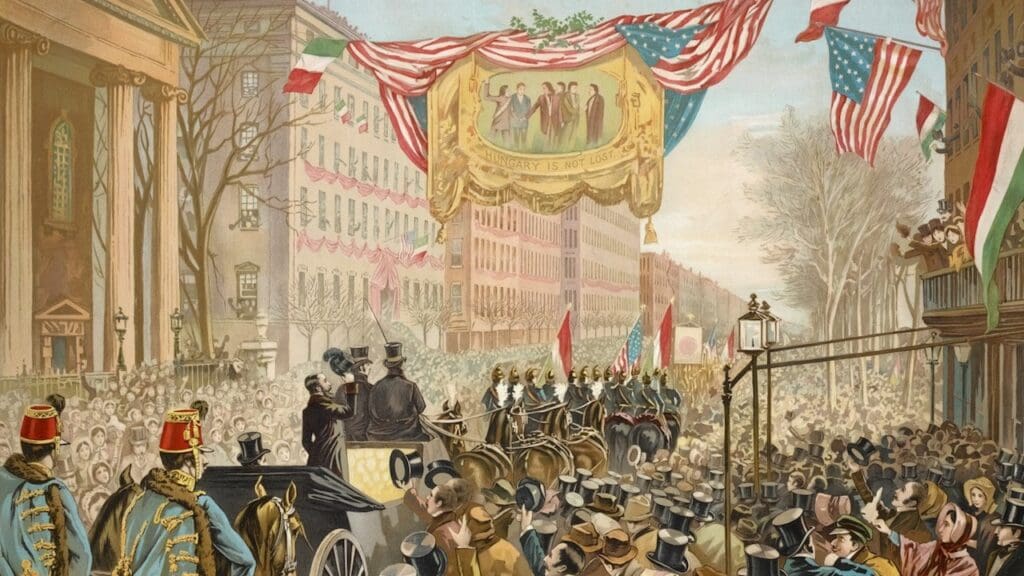
The thing is, Fillmore didn't really trust Kossuth. And he was right to mistrust him, because Kossuth saw this as a chance to get the United States to interfere in Austria to support Hungary. Seward was a big supporter of Kossuth, and Fillmore was worried that the arguments used to promote a free Hungary would also be used to promote abolition. Kossuth asked for help, but Fillmore turned him down. Webster also made it clear that while he supported Hungarian independence, the United States would not interfere to help Hungary. Then Kossuth left.
Honestly, a lot of things almost happened, but only a few things actually did happen. The Nicaragua canal failed. The Mexican railroad failed. The annexation of Cuba failed. The Hungarian intervention failed. Nothing ended up coming out of Hawaii. In the end, the bird poop island thing happened, and Japan did open up. So Fillmore had pretty good foreign policy, and he did avoid annexations and wars that would have likely made the sectional conflict worse. He didn't do bad for someone who was winging it.
Part 9 Part 11