 Part 3
Part 5
Part 3
Part 5
The Democrats left the economy in shambles, with a massive budget deficit and an economic depression. This may have given the Whigs victories in the presidential and congressional elections, but it also meant they were under a lot of pressure. Even worse, once Harrison became president, there was an immediate struggle for power. Harrison was chosen as the Whig candidate primarily due to his popularity as a general, and he wasn't considered the smartest politician. This meant important Whigs like Henry Clay and Daniel Webster were immediately competing for influence over congress and Harrison's cabinet.
This struggle for power could have lasted a while, but then Harrison died of pneumonia. It was only a month into his presidency, and it was the first time a president had ever died while in office. Luckily, the constitution did establish what should happen if the president dies: the vice president must take over. And at the time, the vice president was John Tyler.
John Tyler was a Whig just like Harrison. So things were fine, right? Sure, Harrison was gone, but Tyler would take his place and continue to push for Whig values, right? Well, the Whigs probably should have been more careful about who they nominated as vice president, because Tyler was a Whig in name only. He opposed several important Whig policies, such as a new national bank and higher tariffs. He even supported nullification, meaning states could ignore a federal law if they deemed it unconstitutional. In fact, Tyler had originally been a Democrat and only joined the Whigs because he disliked Andrew Jackson.
Unsurprisingly, having a president who opposed their ideas was a pretty big problem for the Whigs in congress who were trying to fix the economic crisis. Regardless, Henry Clay was determined to get some of his economic proposals passed. Clay got a bill passed that created a new national bank, but he knew Tyler would probably veto it. So some Whigs met and came up with a plan: basically, if Tyler vetoed the bill, they'd be nice and give him a second chance by immediately passing another bank bill. But if he vetoed this second bill, his entire cabinet, which he had inherited from Harrison, would resign. In other words, if Tyler refused to support the Whig economic agenda, they would basically just kick him out of the party. He'd be left with no allies.
The thing is, many supporters of Daniel Webster disliked this plan. Fillmore, for instance, opposed it because he didn't want Henry Clay to gain influence. Instead of getting the Whigs to reject Tyler, he wanted to find a way to convince Tyler to support Whig ideas. He joined some other Whigs to form a counterplot. Their plan was to convince Tyler to agree to a new national bank, which would definitely get other Whigs to see him in a better light. They got Alexander Stuart, a friend of Tyler's to approach him about this new bill. Tyler was actually aware of Henry Clay's plan and was scared of losing his cabinet, so he decided to listen.
At first, it seemed that the Whigs and Tyler would come to an agreement, foiling Clay's plan. But then Tyler had second thoughts and vetoed the new bill anyway. Although many Whigs were not fond of Clay, it was clear Tyler was unwilling to work with them. Even Fillmore was in favor of Clay's plan at this point. And so, every member of Clay's cabinet resigned with the single exception of Daniel Webster.
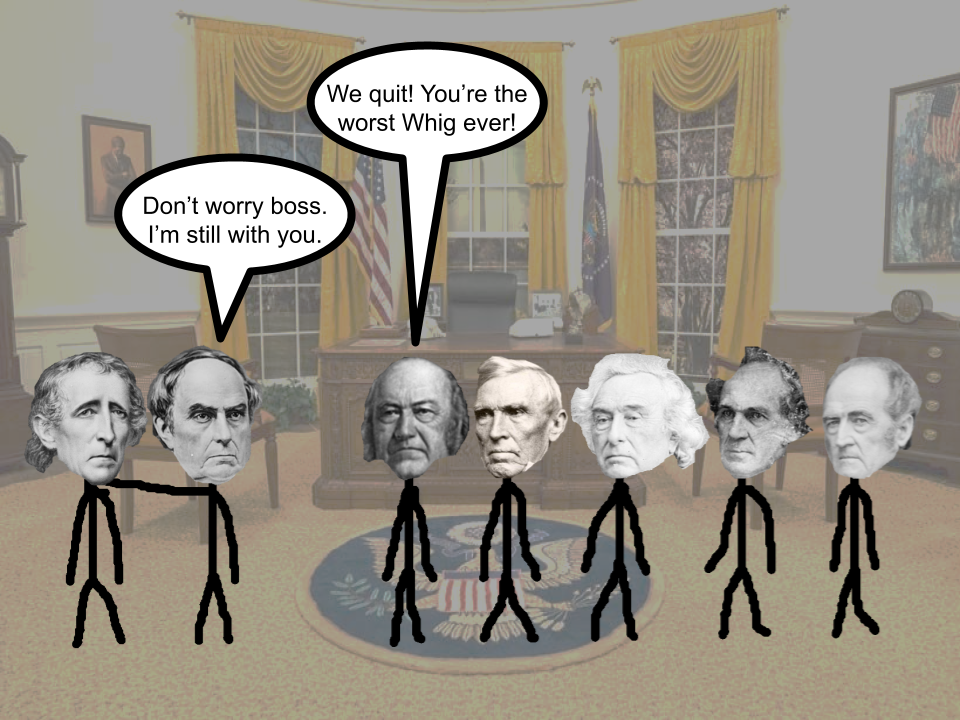
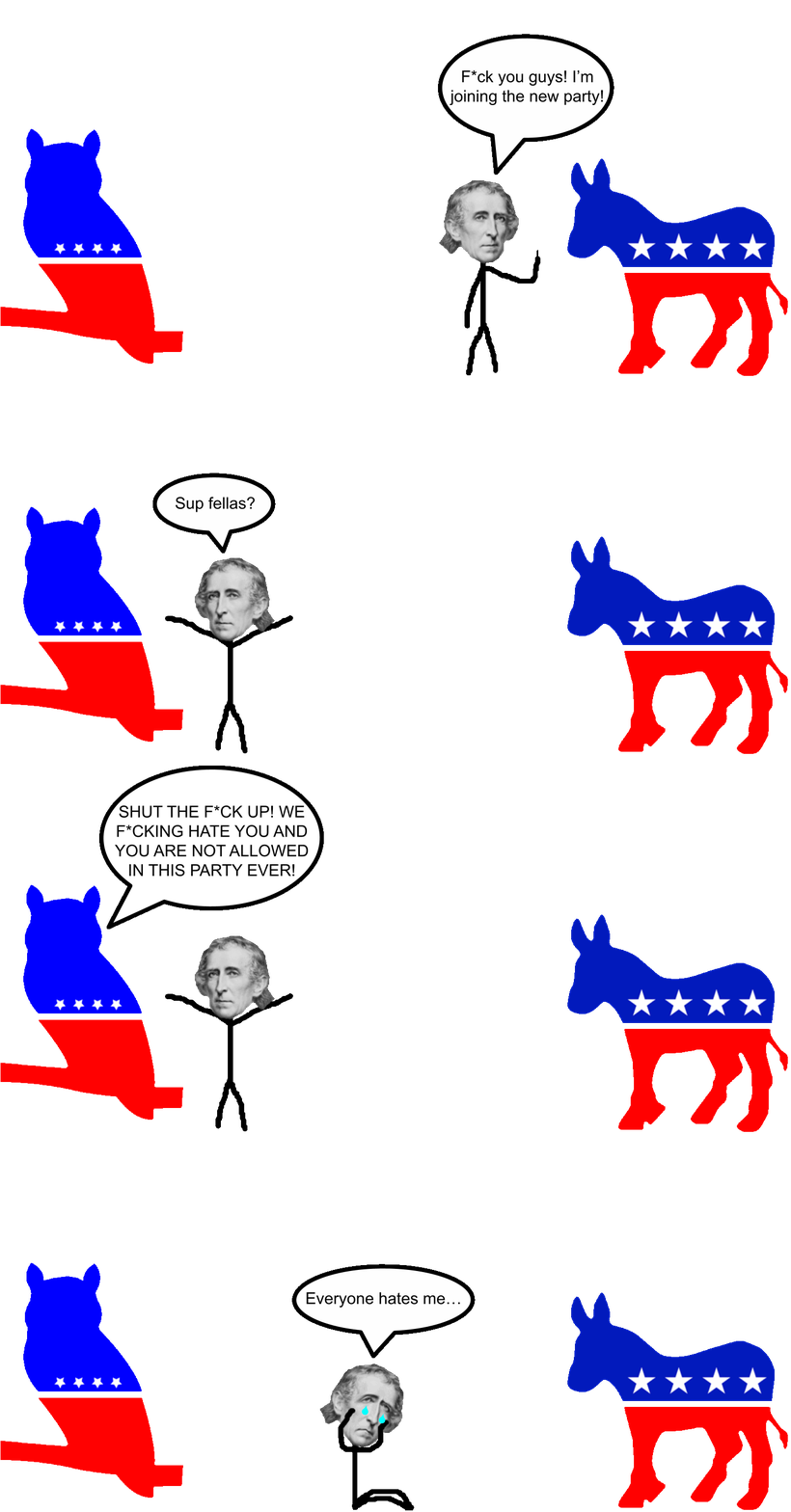
Also, a bunch of Whigs issued an address to the American people saying that they hated Tyler and he was kicked out of the party. Needless to say, Tyler was in a rough position. He'd previously left the Democratic Party for the Whigs, and now the Whigs hated him too. He had no party.
Although the Whigs disowned Tyler, they were still stuck with him as their president for the next four years, and they still had to fix the economy. And Fillmore was now in a very special position: he was now the chairman of the Ways and Means Committee in the House of Representatives. All revenue bills originated in the House of Representatives, and creating those bills was a duty given to the Ways and Means Committee. The chairman of the committee had the most influence over the bills and had to explain them to congress. This meant that he would have heavy involvement with most of the relief program. Millard Fillmore was given a chance to fix the financial crisis and really leave his mark on the nation.
To start, he got two emergency measures through the House of Representatives. The first was that the President could borrow 12,000,000 dollars. This was done because the federal treasury desperately needed money. The second measure aimed at preventing a budget deficit by increasing tax revenue. Fillmore felt the best way to do this was to raise tariffs. He reasoned with people who supported free trade, saying that this was only meant to increase revenue for the government, not to protect American manufacturing.
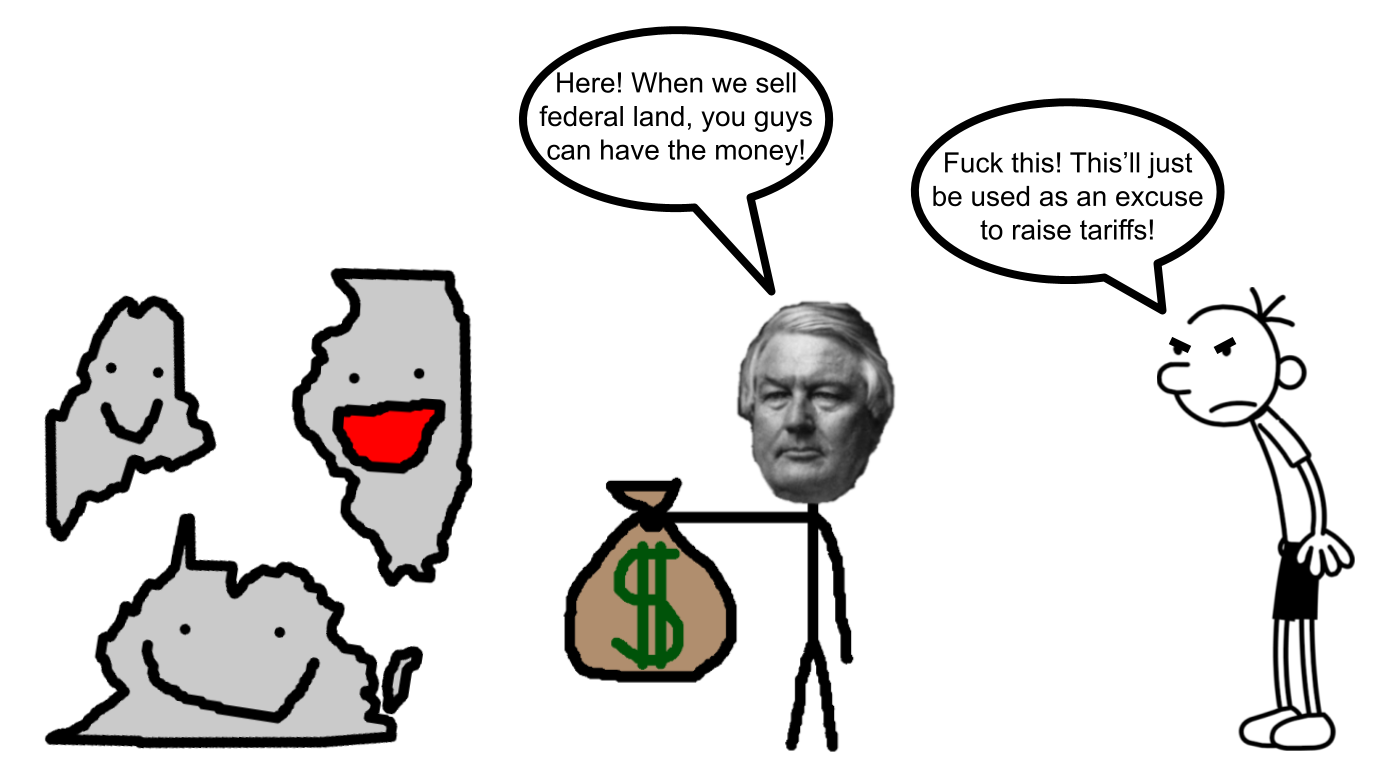
Whigs in congress, including Fillmore, also passed a National Bankruptcy Act to help businessmen who were struggling with old debts. In addition to that, they passed the Distribution Act of 1841. Fillmore and many other Whigs supported distributing any revenue gained from the sale of public land to the states. However, not everyone was on board. Fillmore himself acknowledged that distributing so much revenue to the states would make a budget deficit much more likely, and that was something he was supposed to prevent. However, he felt that the advantages of distribution still outweighed the drawbacks.
There were many opponents of distribution, and freetraders were the most important. They recognized that throwing away so much federal revenue to the states would serve as the perfect excuse to increase federal revenue by raising tariffs. Because of this, freetraders made sure the distribution act said that if tariffs ever got higher than 20%, distribution would stop.
Despite the things the Whigs achieved during this time, the economy was still in a bad state. In 1841, Tyler had cooperated with the Whigs in the hopes of addressing the crisis, but they had to make concessions to him. They managed to implement distribution, but were only able to do so by promising to put a cap on tariffs. And when tariffs were raised, it was only supposed to be for raising revenue, not for protection of American industry. Now in 1842, Fillmore hoped to make more permanent progress.
Fillmore explained his full thoughts on tariffs in a speech to congress that year. He said that he wanted to do what was best for America, not what was best for other nations. Ultimately, the primary purpose of raising tariffs at this time was to raise revenue, not to protect American industry. However, he acknowledged, protecting American industry was undeniably a side effect of raising tariffs.
According to Fillmore, in a perfect world with no war, tariffs would be done away with in every nation. Producers would be free to make the things they’re best at making, and consumers could buy goods at the cheapest possible prices. Although tariffs could protect American industry, they also make products more expensive for American consumers, and it would be unfair to make a law that benefited one class of people at the expense of another.
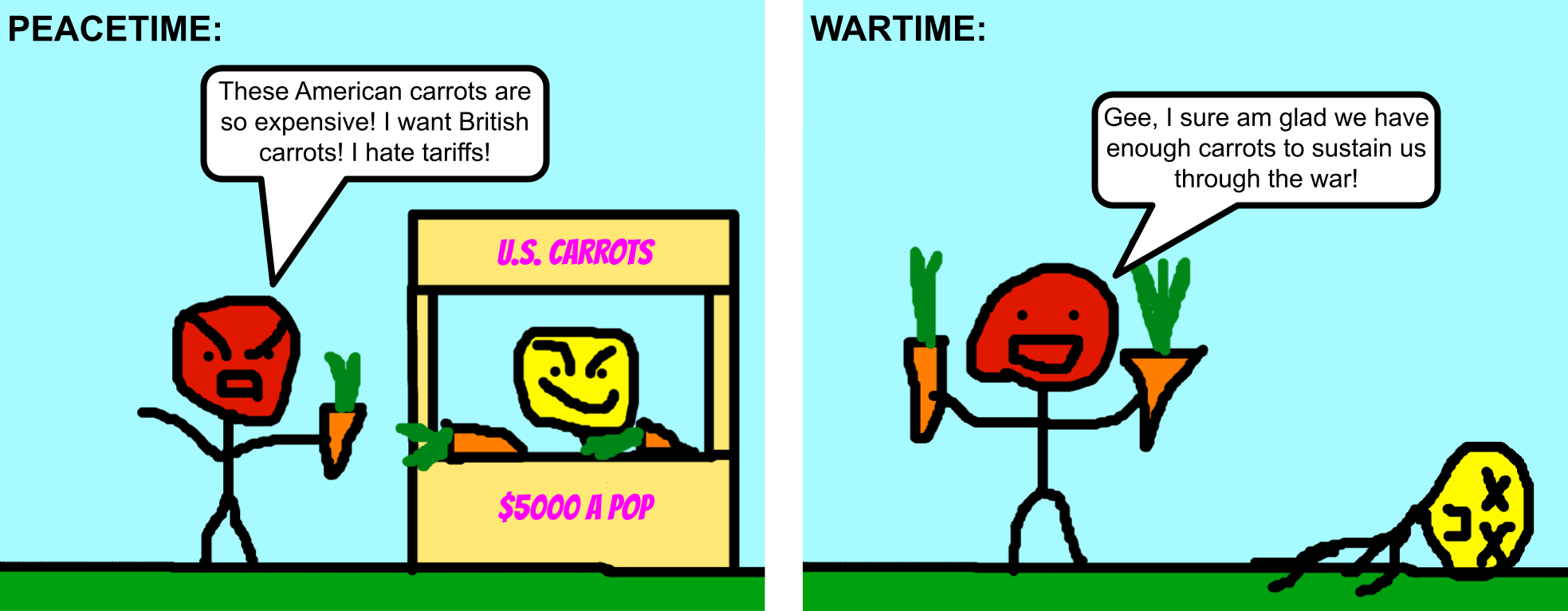
However, that perfect world did not exist, and because of that, it may be necessary to implement tariffs. He did not support protecting American industry just to help industrialists, but he did support protecting American industry if it was beneficial for the whole nation. For example, if America found itself at war with a nation it depended on for certain necessary goods, it would be in a very bad position. Because of this, it may be necessary to use tariffs to encourage the production of anything necessary for the nation's survival. It may lead to higher prices during times of peace, but it would also make things much easier during times of war.
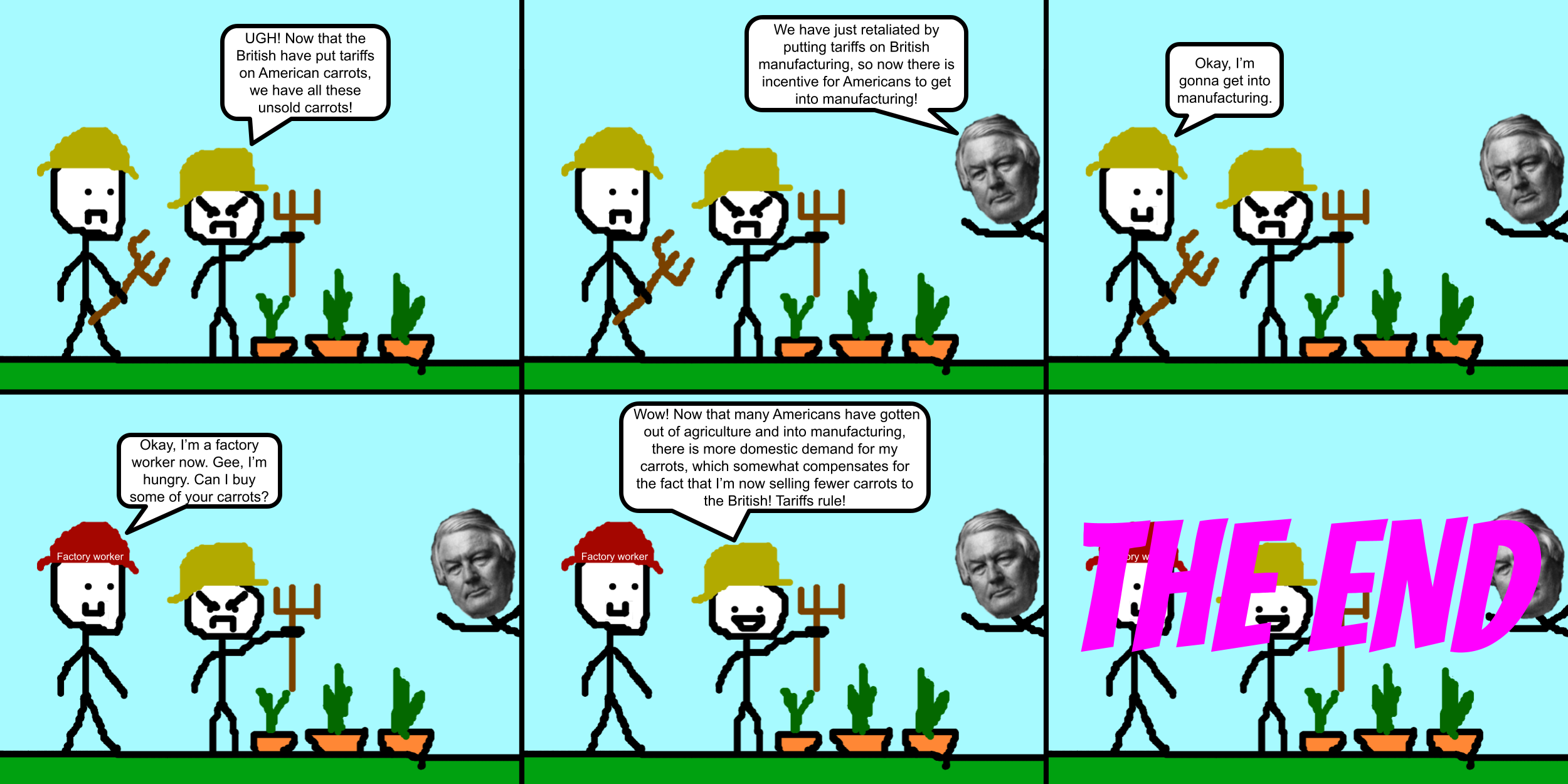
Fillmore also thought it was necessary to raise tariffs in retaliation to other nations putting tariffs on the United States. At the time, the United States had far more people employed in agriculture than manufacturing, so if other nations put high tariffs on American crops, it would be very harmful. In that circumstance, America must retaliate with tariffs of its own. Plus, these kinds of tariffs would incentivize people to get out of agriculture and into manufacturing. This would reduce the number of producers of agriculture and increase the number of consumers, which would create more demand for agriculture at home, somewhat compensating for the reduced demand abroad.
Fillmore also argued that once tariffs have been implemented, it would be unfair to suddenly take them away. When the government implements tariffs, it creates an incentive for people to drop their current job and pick up a new job in whatever industry is protected by the tariffs. If the government then suddenly takes those tariffs away, people would get screwed. In other words, it would be unfair for the government to incentivize people to do something and then suddenly remove that incentive.
So those were Fillmore's thoughts, but what about everyone else's? Well, after years of intense debate about tariffs, it seemed like protectionists were finally making major progress. Even the normally heavily anti-tariff South was beginning to favor them more due to their increased industrialization. Northerners were willing to accept any experiment to end the economic crisis, so they were also more pro-tariff than ever. Fillmore had the support of Francis Granger, John Quincy Adams, and John Minor Botts. However, there were some major problems.
During this time, the tariff rate was set by determining the difference between the government's income and expenditures, then setting a rate that would make up the difference. This meant duties fluctuated heavily over time and could never get too high. In addition to this, the Distribution Act of 1841 said that if tariffs ever rose above 20%, distribution would stop, which was considered unacceptable to Fillmore. Finally, there was a good chance that higher tariffs would be vetoed by Tyler. Tyler had only previously allowed higher tariffs because he saw the need for higher revenue, and he opposed tariffs in general. And since he had been kicked out of the Whig Party, he was trying to get the support of Southern Democrats, so opposing tariffs seemed like a smart move.
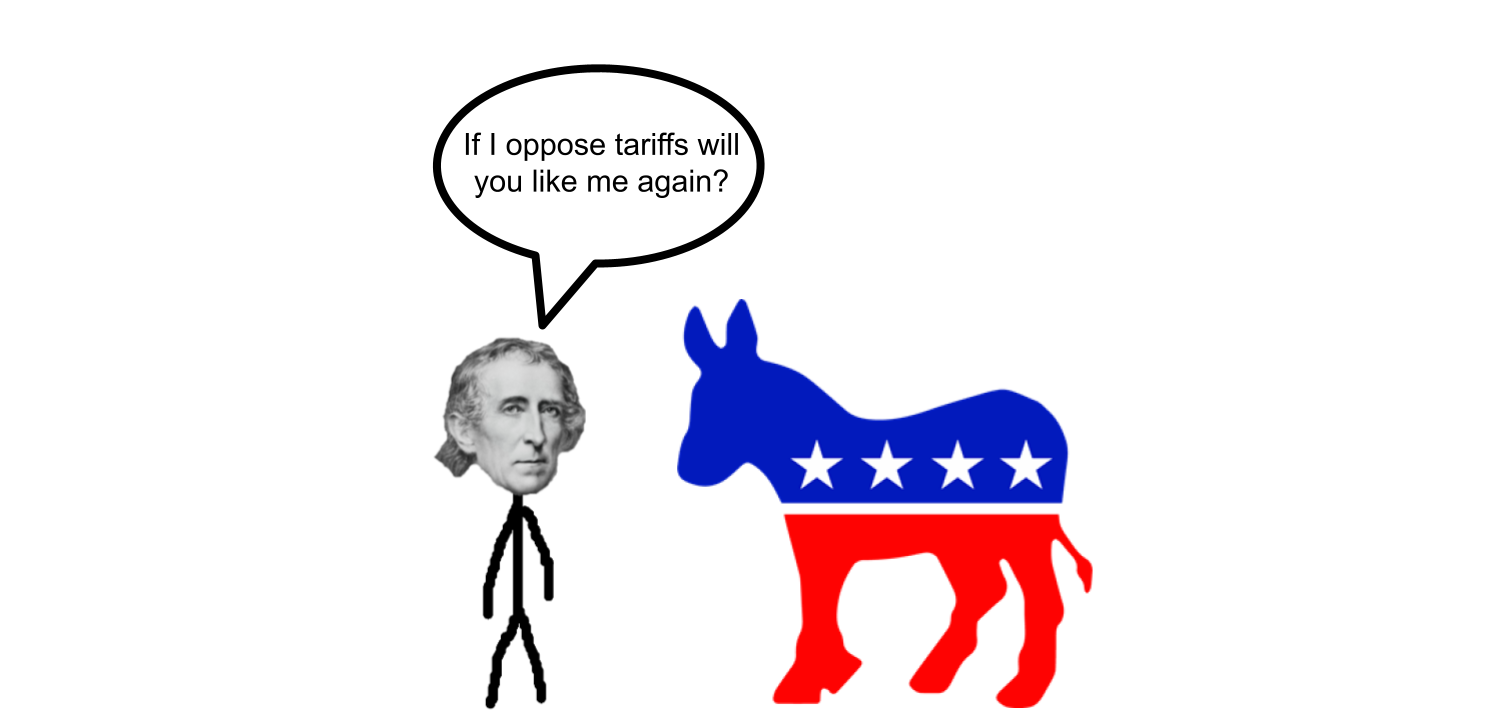
Fillmore and the other Whigs hoped they could use the tariff situation to break the growing friendship between Tyler and the Democrats. Fillmore knew Tyler was not a protectionist in general, but that he approved of higher tariffs only to relieve the financial crisis. He also knew that Southern Democrats expected Tyler to oppose any tariffs to appeal to them. But although Tyler wanted to gain the support of Democrats, he didn't want to alienate any remaining Whig supporters. Because of this, it was possible that he may compromise and support higher tariffs for the sake of revenue while disavowing them in general. But Fillmore didn't plan on compromising with Tyler.
As time progressed, the economy got worse and worse, and Fillmore allowed the pressure to build up. Revenue was getting extremely low despite the previous increase in tariffs, industrial firms were closing, and unemployment was rising. And at just the right time in 1842 when the economy was in a dire state, he finally introduced two tariff bills and got them through congress. These bills effectively gave Fillmore and the Whigs all of what they wanted and did not compromise on anything, raising tariffs without ending distribution.
Tyler was now in a situation where he lost no matter what. He either sided with the Whigs and alienated his Democratic supporters, or he let the economy get even worse during an already horrible time. But Tyler opposed distribution, so he ended up vetoing the bills. From there, the Whigs gave the veto message to a committee headed by John Quincy Adams. The committee made a report denouncing Tyler. They even considered impeachment, but exercised restraint for the time being. Finally, Fillmore submitted a final bill that got rid of distribution while still raising tariffs heavily, and Tyler reluctantly approved it. So while distribution was eliminated, the Whigs still got higher tariffs.
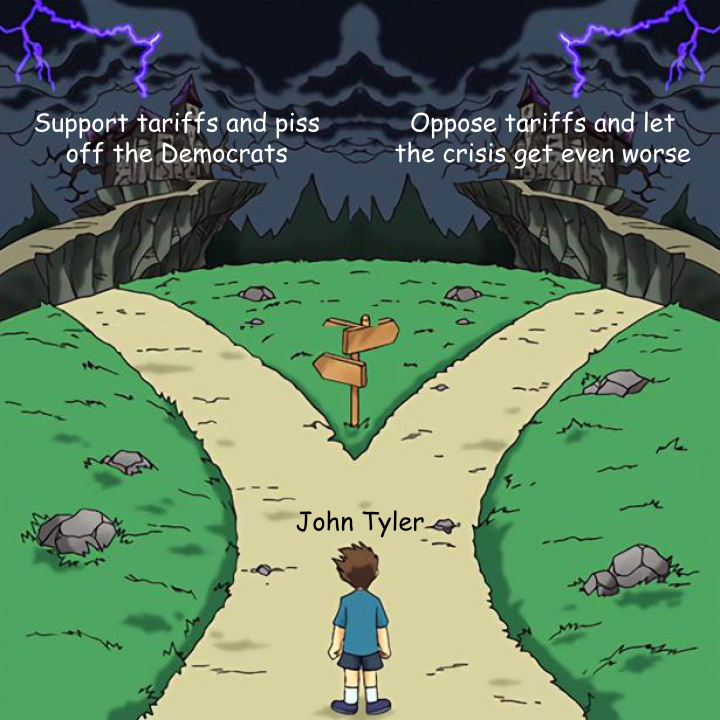
By signing this bill, Tyler alienated the Democrats. Although the Whigs didn't get everything they wanted, this was still a protectionist triumph. Manufacturers and merchants rejoiced, and whether the tariffs were responsible or not, the depression started to subside. In the end, Fillmore became a lot more popular because of his actions. No top ten list of the best chairmen of the Ways and Means Committee is complete without him.
Part 3 Part 5