 Part 4
Part 6
Part 4
Part 6
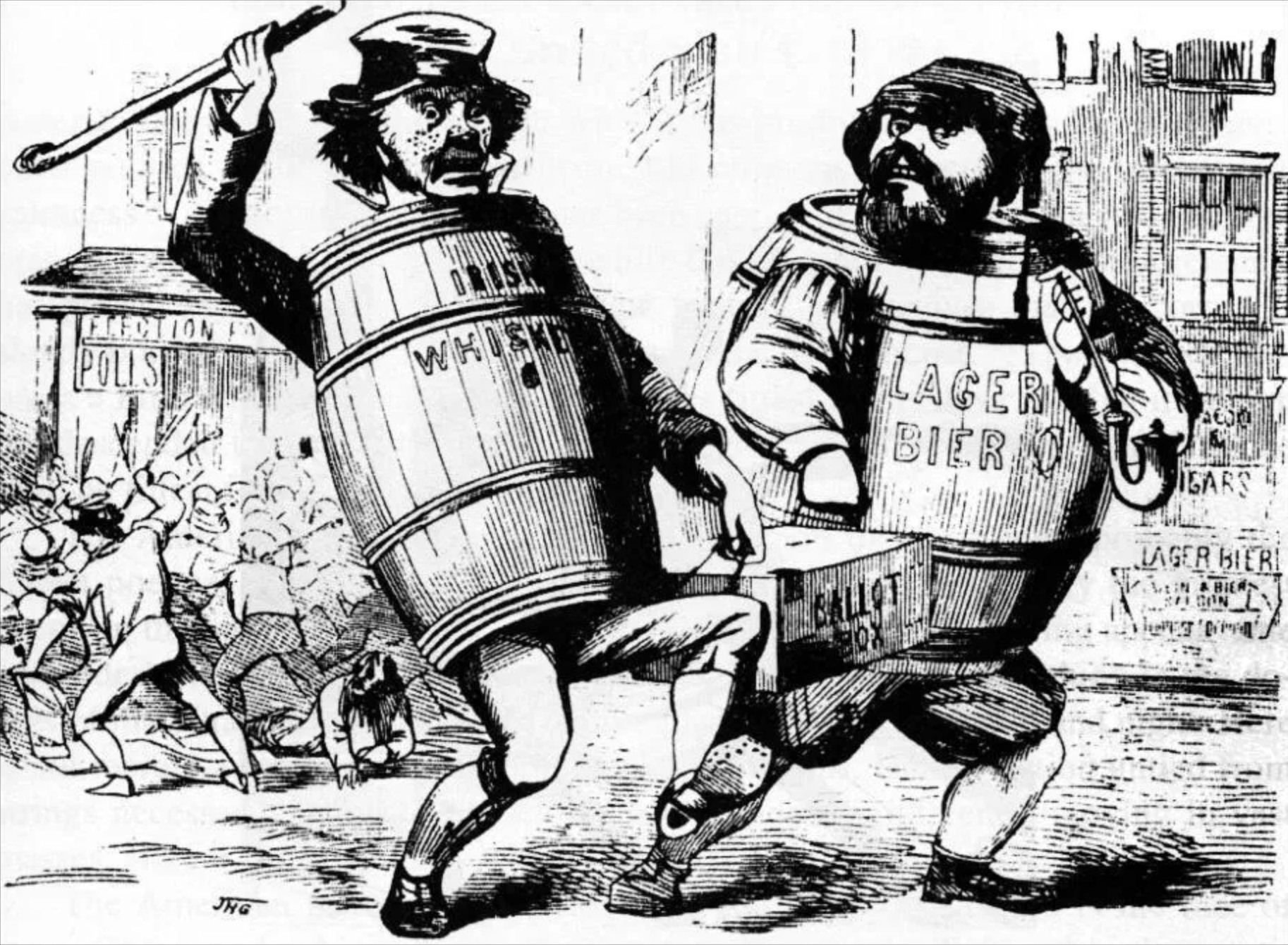
In the 1840s, nativism began to rise in the United States. Nativism is the belief that a country should prioritize its native-born citizens over immigrants. In the 1840s, immigration was on the rise, and as a result, anti-immigrant sentiment exploded, especially in the North. Many of these immigrants were Catholics, and America's overwhelmingly protestant population was not exactly fond of that. In the end, this presented a question to the Whigs: how should they handle nativism? Should they capitalize on it or denounce it? Should they appeal to the nativists or to the new immigrants?
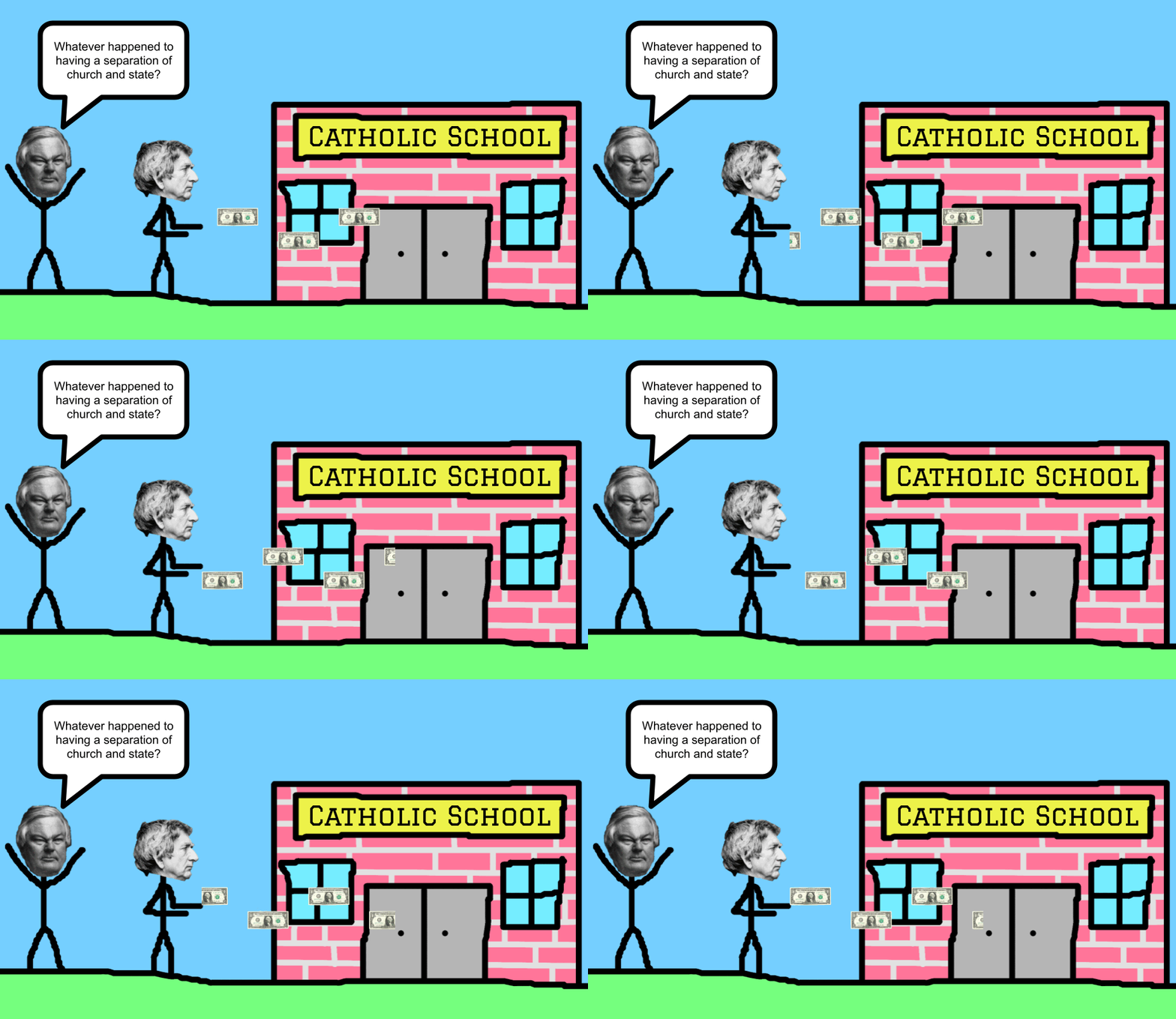
Well, William Seward, still the governor of New York, wanted to appeal to immigrants and suggested that New York should create schools for Catholics. At the time, Catholics were starting to want part of the public school fund for their own schools. But most New York Whigs disagreed with this idea and many of them wanted to embrace nativism. In New York City, Whigs used anti-Catholic and nativist sentiment to win their next election. Soon, nativists formed their own party, the American Republican Party (which is not the same as the modern Republican Party), and they formed an alliance with the Whigs.
But nativism wasn't the only ideology rising during this time. For a while, antislavery activists were less focused on political changes and more focused on convincing people of the evil nature of slavery. These activists hoped that if people were convinced that slavery was an evil institution that ran contrary to America's values, they would want to abolish it. But at this point, it was clear that their tactics weren't working, and some abolitionists formed a new party: the Liberty Party. Although the new party got clobbered in elections in 1840, it was still clear that abolitionists were a rising threat, including in New York. Northerners were increasingly disgusted by slavery.
As for Fillmore, he wasn't sure how to react to nativism or abolitionism, but more than anything else, he was upset to see the issues dividing his party, which began to struggle around this time. When the New York Whigs lost control of the State Assembly in 1841, he put some of the blame on Seward and Weed, believing that Seward's idea of giving public funds to Catholic schools had turned Protestants away from them. At the same time, Fillmore himself was not a nativist and only opposed the policy because he believed in a separation of church and state.
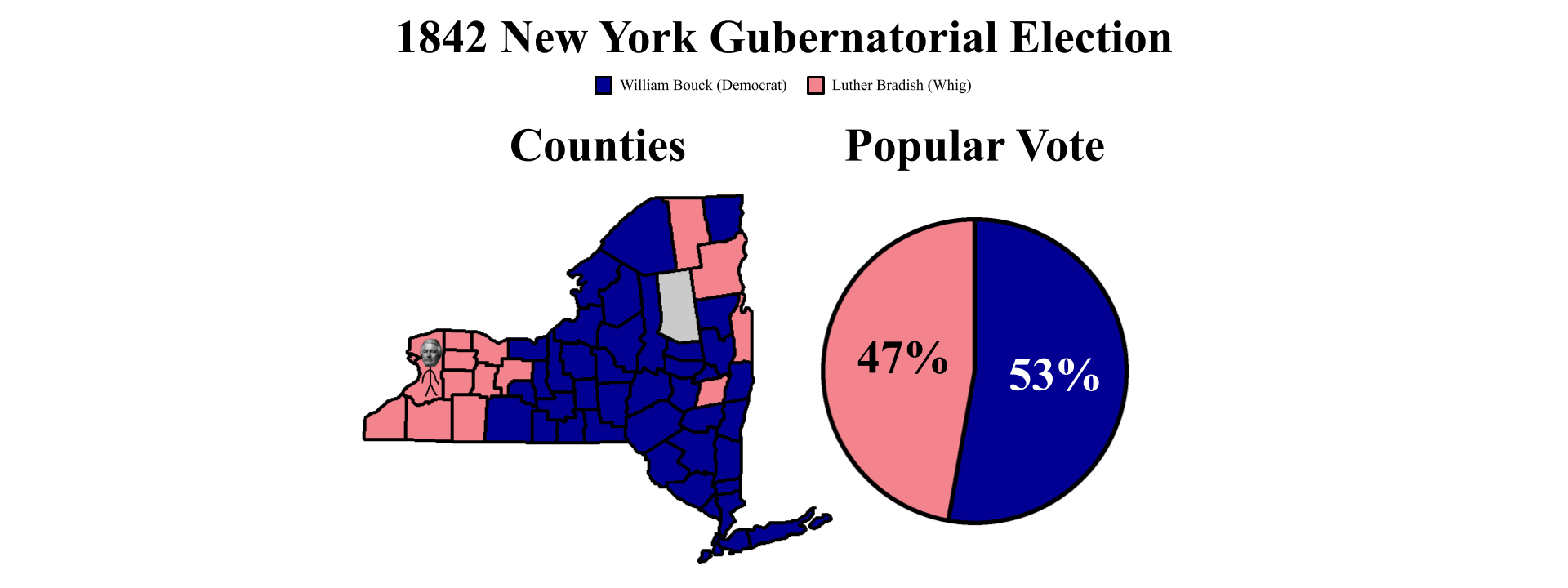
Meanwhile, Seward was having a rough time as governor of New York. When Virginia tried extraditing some people in New York who had aided in the escape of a slave, Seward refused. This pissed off Virginia, and its legislature retaliated with new restrictions on ships trading between Virginia and New York, which angered New York merchants. Worst of all, Seward had approved a lot of canal enlargements, which ended up having a much higher cost than was initially expected. This ended up giving New York a huge amount of debt. Due to his governorship not going well, Seward refused to seek a third term. Instead, Luther Bradish was the Whig nominee. Unfortunately for the Whigs, he wasn't able to pull off a win.
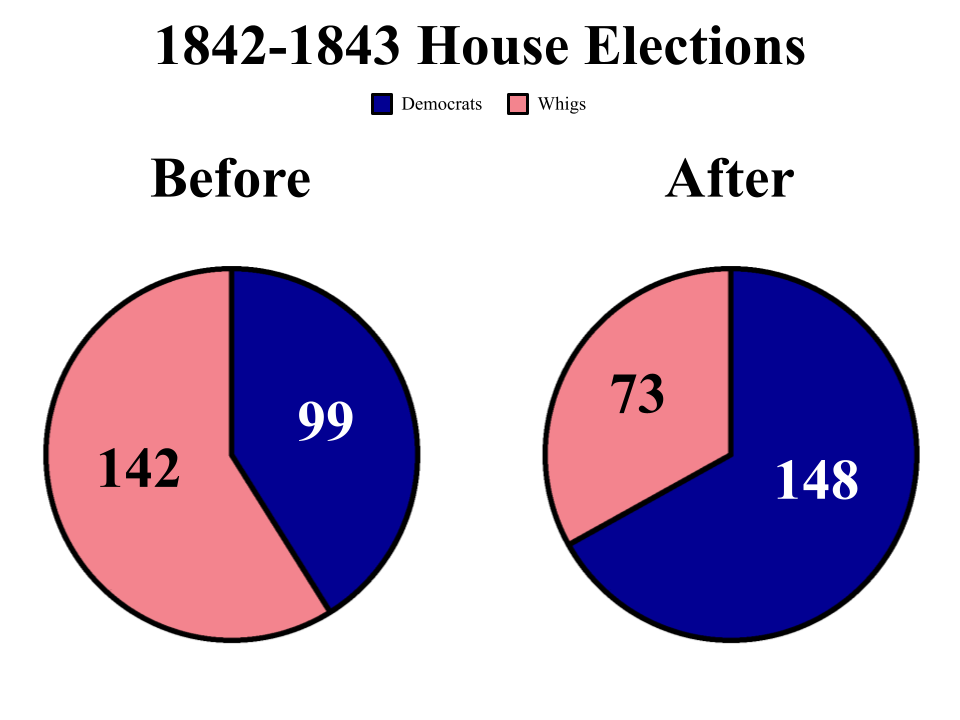
This was a harsh loss for New York Whigs, but Whigs were struggling in the rest of the country too. In the House of Representatives, the Whigs went from having a huge majority to getting destroyed by the Democrats. In the wake of the economic crisis, voters had decided to give them a chance. But the Whigs had struggled through the Tyler administration, and now they were back to being the losers.
With his party declining, Fillmore was pessimistic about his future in Washington, so he decided not to run for reelection. Instead, he went back to New York to help repair the New York Whigs. For the time being, he retired from public life. A few years later, he made his return.
Due in part to his leadership in opposing the Tyler administration, Henry Clay had become very popular and influential among Whigs, and it was obvious that he would be their nominee for president in 1844. Meanwhile, the vice presidency was wide open, which seemed like a great opportunity for Fillmore. And that wasn't the only office he could pursue. After the Whigs lost the New York governorship in 1842, they needed a candidate who could win it back in 1844, and many thought Fillmore was their man.
In the end, Fillmore decided to run for vice president, not wanting to become governor of New York. Thurlow Weed disagreed with this decision and had other plans for him. In New York, the three potential candidates for governor were John Collier, Luther Bradish, or Millard Fillmore. Weed didn't like any of them, but he considered Fillmore to be the lesser of three evils, and he was determined to make Fillmore the Whig candidate whether he wanted it or not. Plus, Weed actually wanted to push Seward for vice president, so he didn't want Fillmore getting in his way.
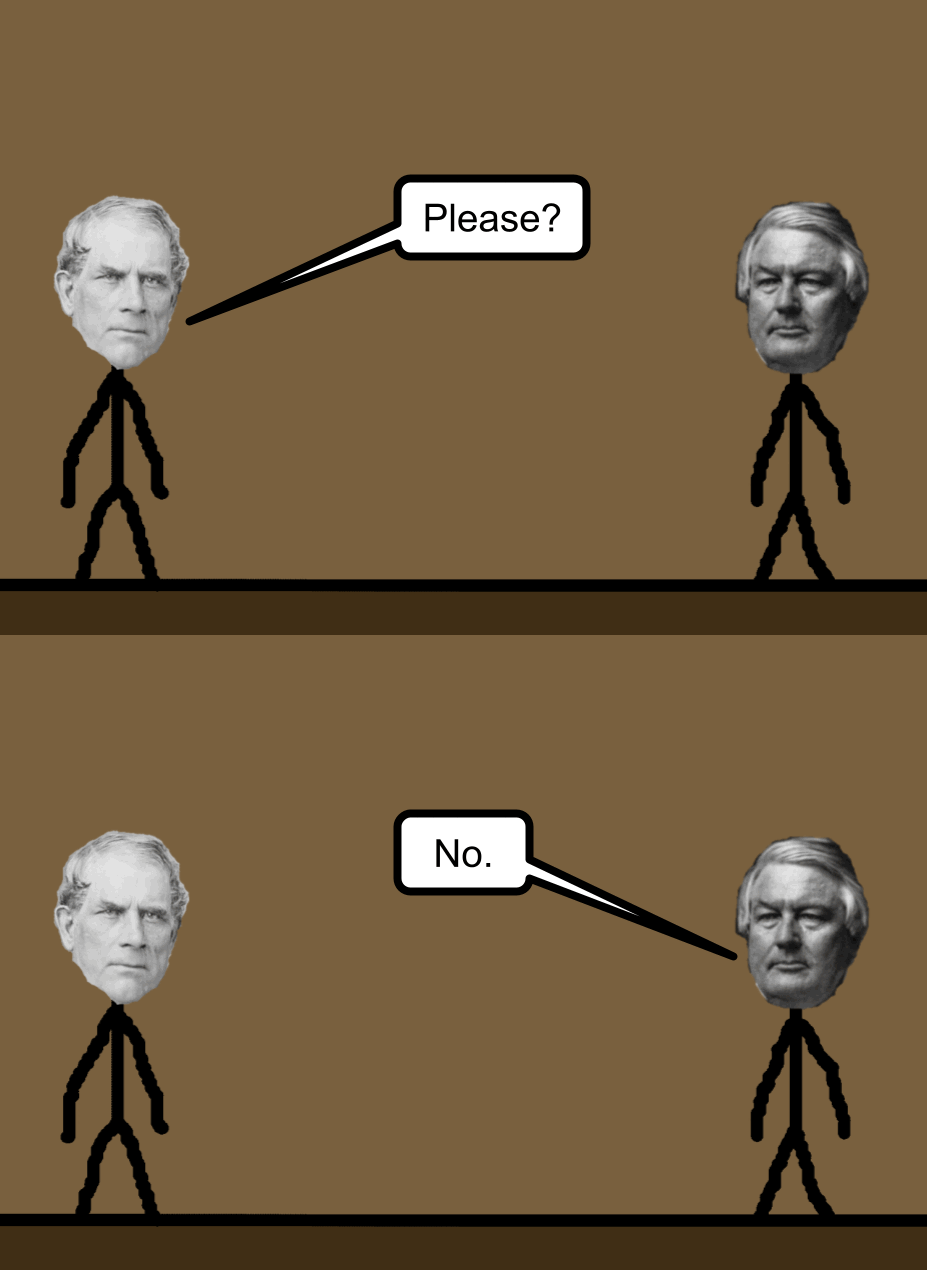
When Fillmore heard of Weed's aspirations, he decided to work with John Collier, and they came to an agreement: Collier would support Fillmore for vice president, and in exchange, Fillmore would support Collier for New York governor. The plan seemed even stronger when Seward, lacking confidence at the time, refused to seek the vice presidential nomination.
Weed's problem was that he had a lot less influence over Fillmore now than he once did. They weren't necessarily enemies, but they weren't friends anymore either. Weed wanted to strengthen their relationship, so he arranged a meeting with Fillmore, Seward, and Nathan Hall. At the meeting, Weed relented and agreed to support Fillmore for vice president and ensure he got good press. Instead, they would support Hall for the New York governorship. Unfortunately, Hall got sick and was unable to run, putting Weed back where he started.
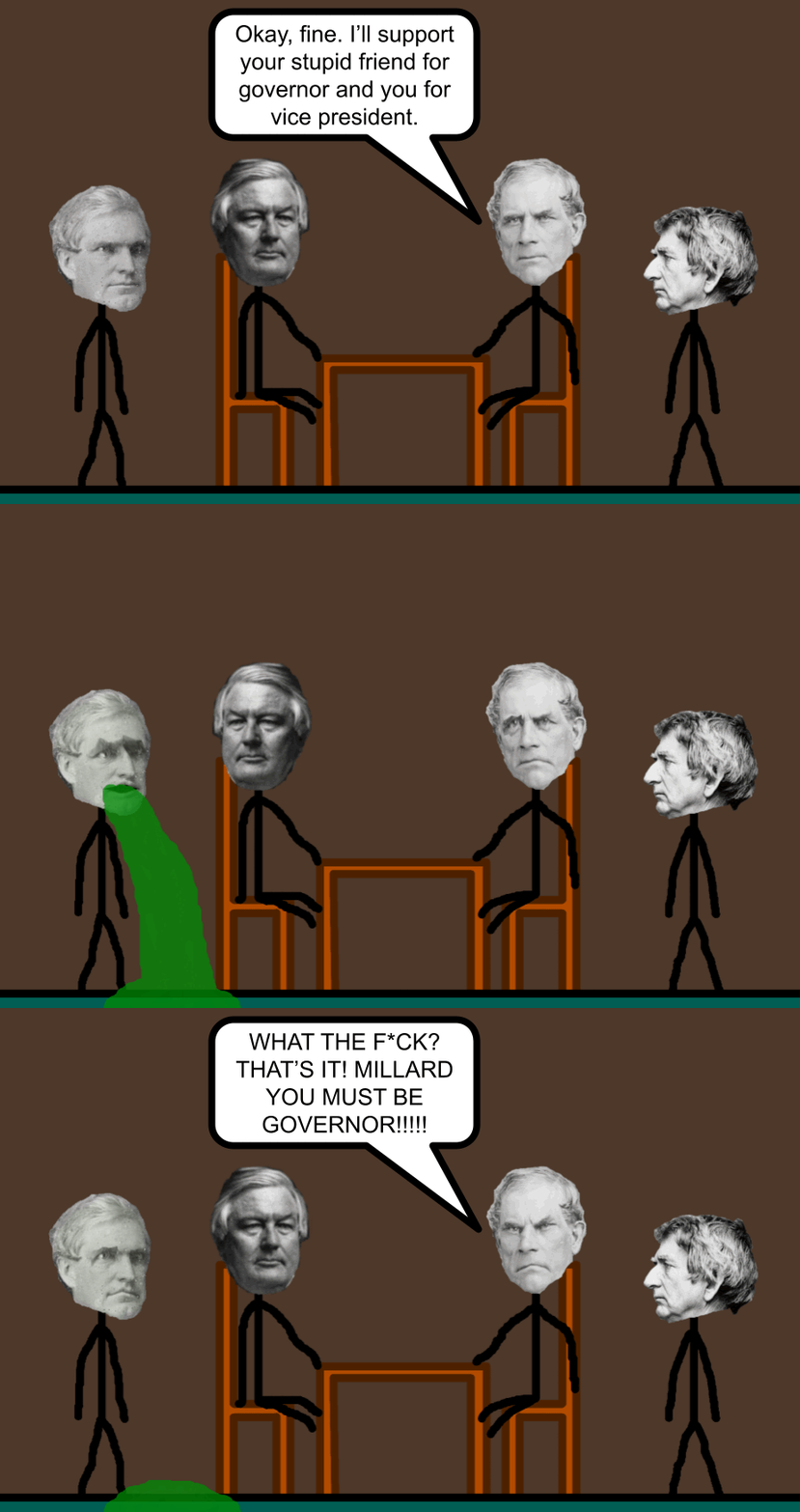
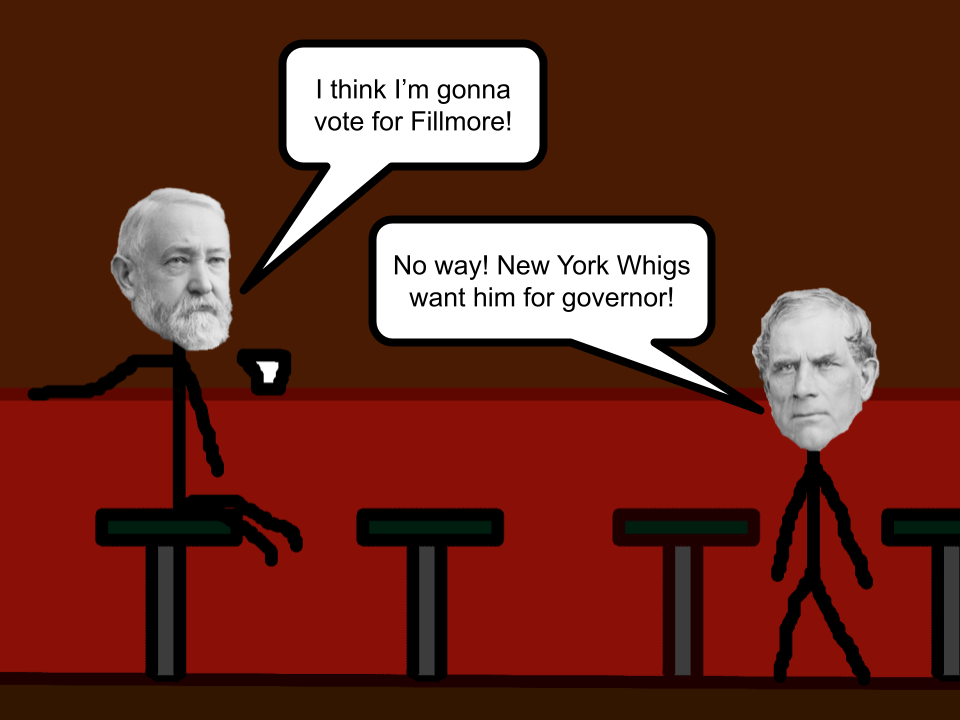
Weed asked Fillmore to run for governor one last time, but Fillmore refused. Weed now had a new plan: he would have to ensure Fillmore lost the vice presidential nomination, forcing him to run for governor instead. In May of 1844, the Whig national convention was being held in Baltimore. Fillmore did not attend, but Weed did. So once he got there, he told all the people from the other states that the New York Whigs would be happy if Fillmore was not nominated for Vice President since they wanted him as Governor. How evil.
At the Whig national convention, a number of delegates from every state voted on who the nominee should be. The number of delegates a state sent was the same as the number of votes that state had in the electoral college. A candidate needed a majority of the votes to win, and if no candidate reached a majority, the delegates would vote again and again until someone did. This meant that sometimes, the delegates could spend hours voting over and over without any candidate getting a majority. So how did the first vote go?
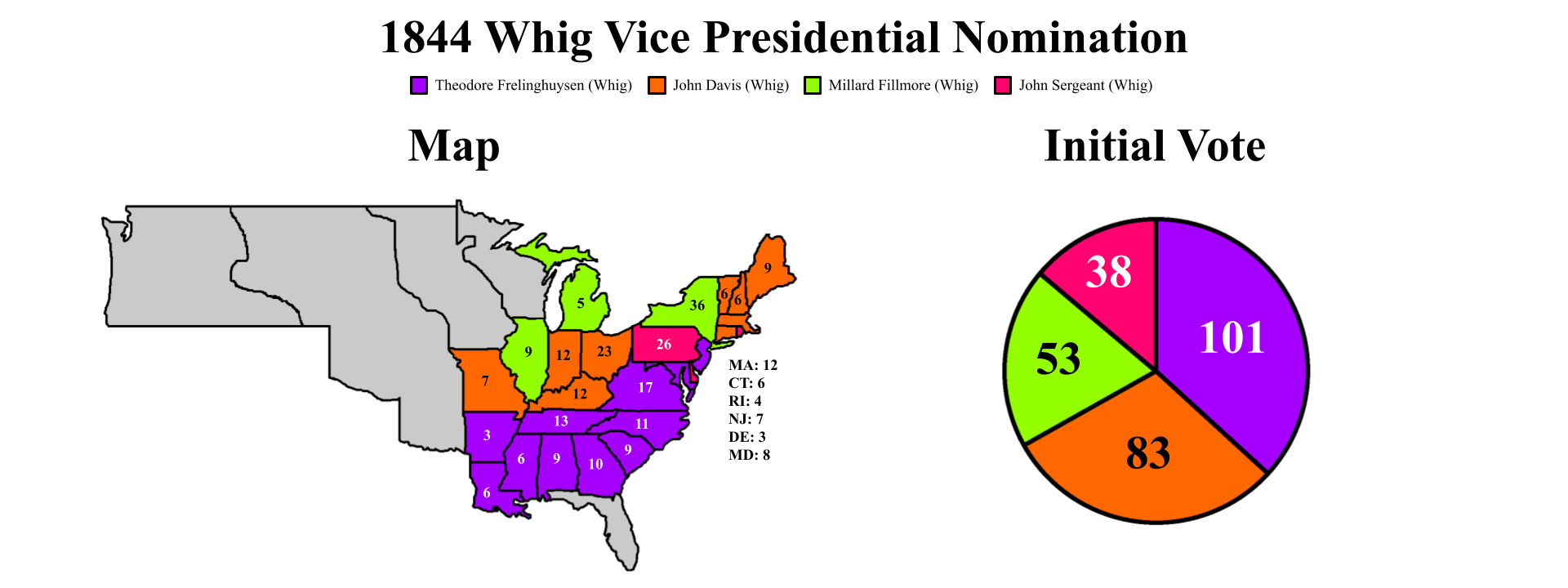
Fillmore finished in third place in the first vote, but no candidate got a majority of the votes, so they voted again. No one got a majority in the second vote either. Then, in the third vote, Theodore Frelinghuysen won. Weed's plan had seemingly worked.
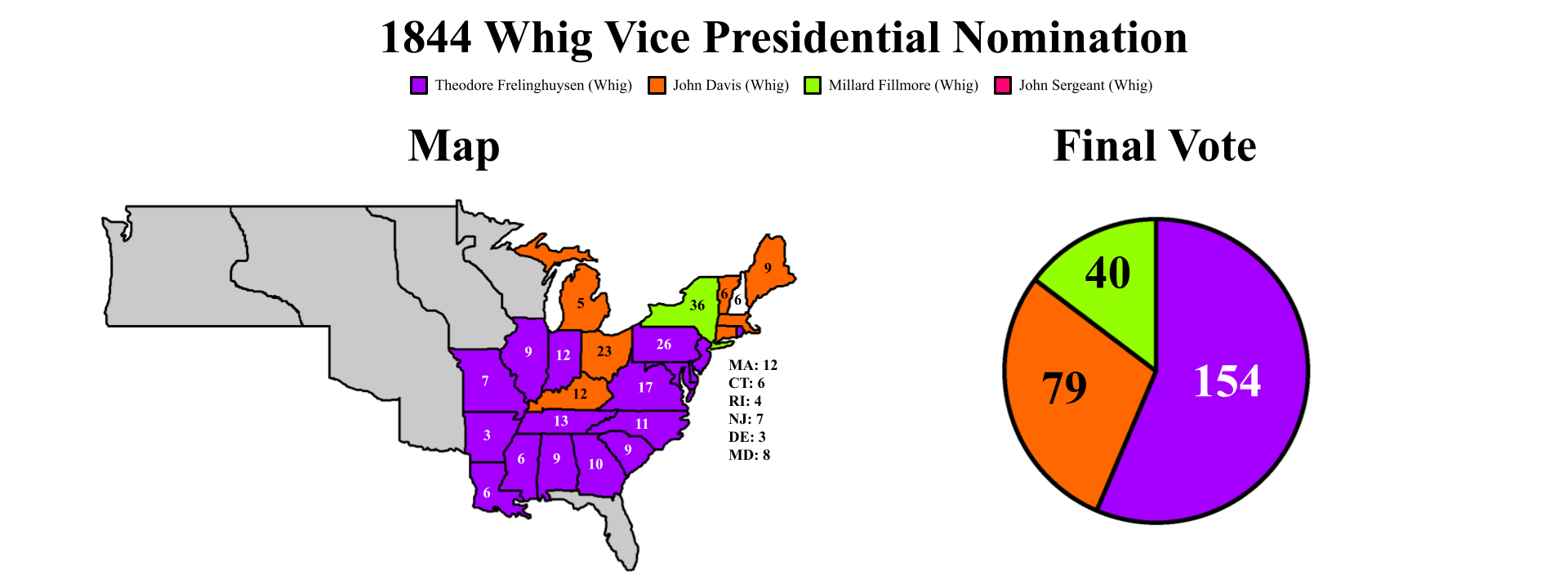
Fillmore, unsurprisingly, was very upset about this, but he knew it was important to support Frelinghuysen for the sake of party unity. Regardless, he was angry with Weed and continued to refuse to run for governor. His agreement with John Collier was still in place, and he refused to betray Collier, especially due to his disdain for Weed. Eventually though, Collier faced a lot of pressure to withdraw from the race because most people believed Fillmore had a better shot at winning. Collier finally gave in, and the New York convention nominated Fillmore for governor despite all of his attempts to stop that from happening.
Fillmore had a lot going for him in the gubernatorial race. Although he was not an abolitionist, abolitionists considered him an acceptable candidate due to his past actions. In 1837, he worked with John Quincy Adams to oppose the pro-slavery gag rule in congress. In 1838, he had answered questions exactly how abolitionists wanted him to, albeit reluctantly. And in a time when the potential annexation of Texas was a major political issue, Fillmore unapologetically opposed it. Although he did not explicitly state that he opposed the annexation because he didn't want another slave state, most people suspected that this was his reason anyway.
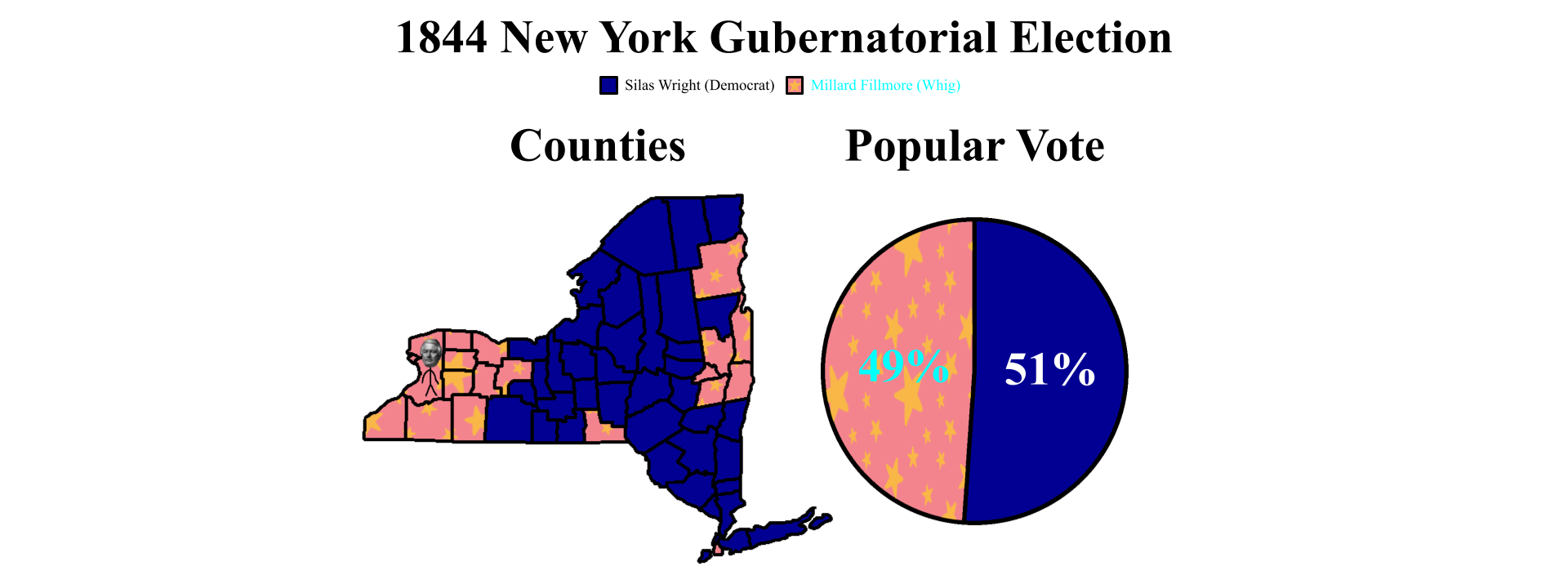
His efforts were in vain. Fillmore narrowly lost his race for governor. As for Henry Clay in his run for the presidency…
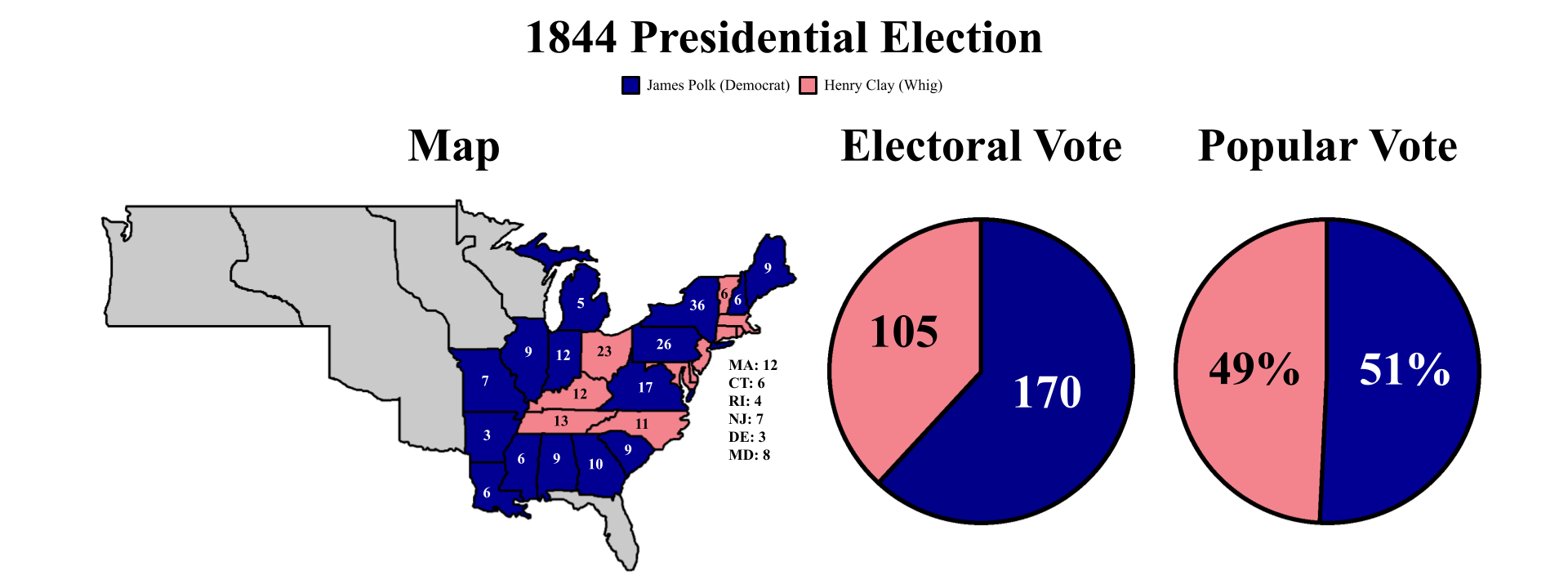
Losing the presidency was another devastating blow for the Whigs. In congressional elections, they ended up gaining a few House seats, but they were still far behind the Democrats. Back in 1840, the Whigs had finally defeated the Democrats and risen to the top. Now they found themselves weaker than ever.
With some unfortunate losses, Whigs began to speculate on where things had gone wrong. Fillmore believed their failures in New York were caused by abolitionists and foreign Catholics. Catholics had been scared away by the nativist wing of the party, and the previously mentioned Liberty Party had taken votes away from the Whigs, to a point where it's possible the Whigs would have won the New York governorship if the Liberty Party had not existed. In addition, the Whigs might have won New York in the presidential election if the Liberty Party had not existed, which would have given them enough electoral votes to win the entire election.
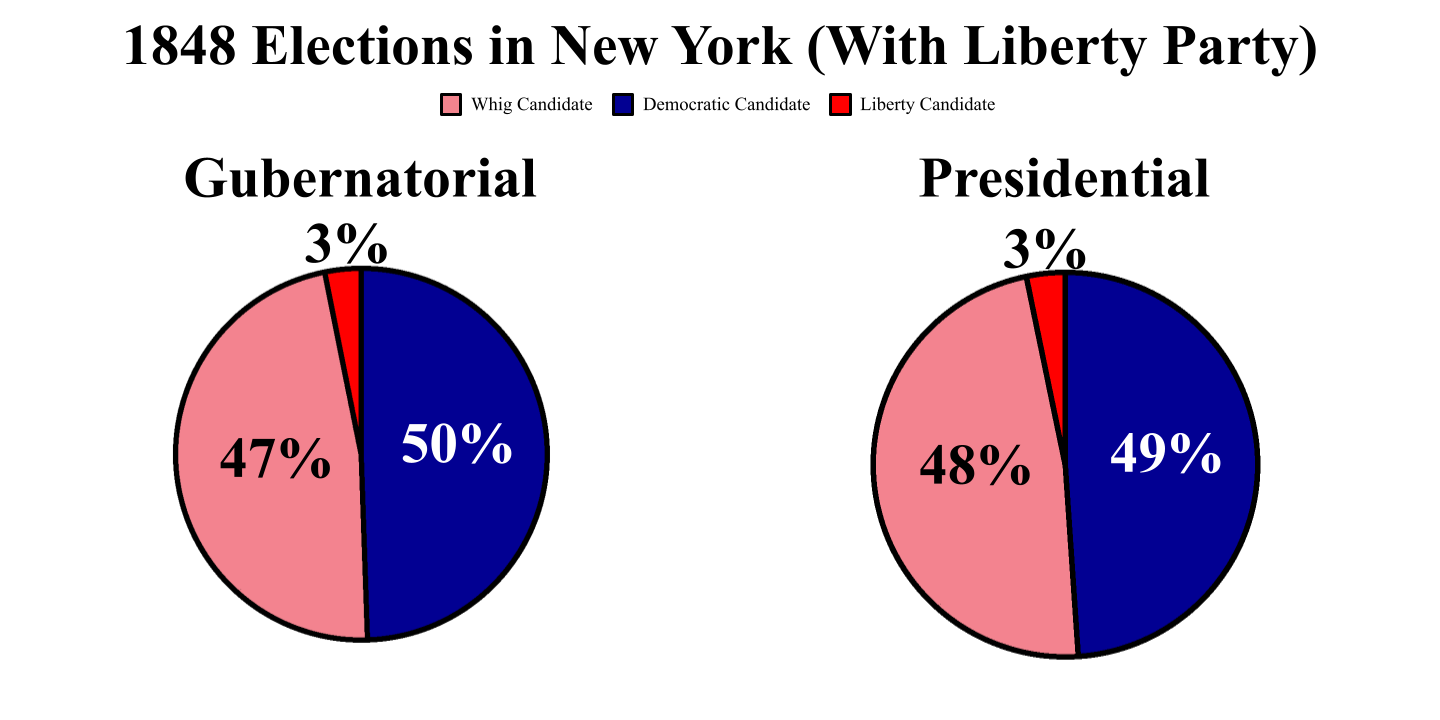
Fillmore wasn't alone in his assessment. Many others also blamed Clay's defeat on abolitionists and foreigners, with Frelinghuysen writing to Clay complaining about the influence of the foreign vote. Nativist sentiment continued to rise. Some Whigs began to believe that respectable American citizens voted Whig, whereas foreigners voted Democrat. Some began to believe that all citizens should have to be born in the United States, and that the foreign vote was becoming too influential. The American Republican Party soon died, but nativist sentiment lived on.
Part 4 Part 6