 Part 7
Part 9
Part 7
Part 9
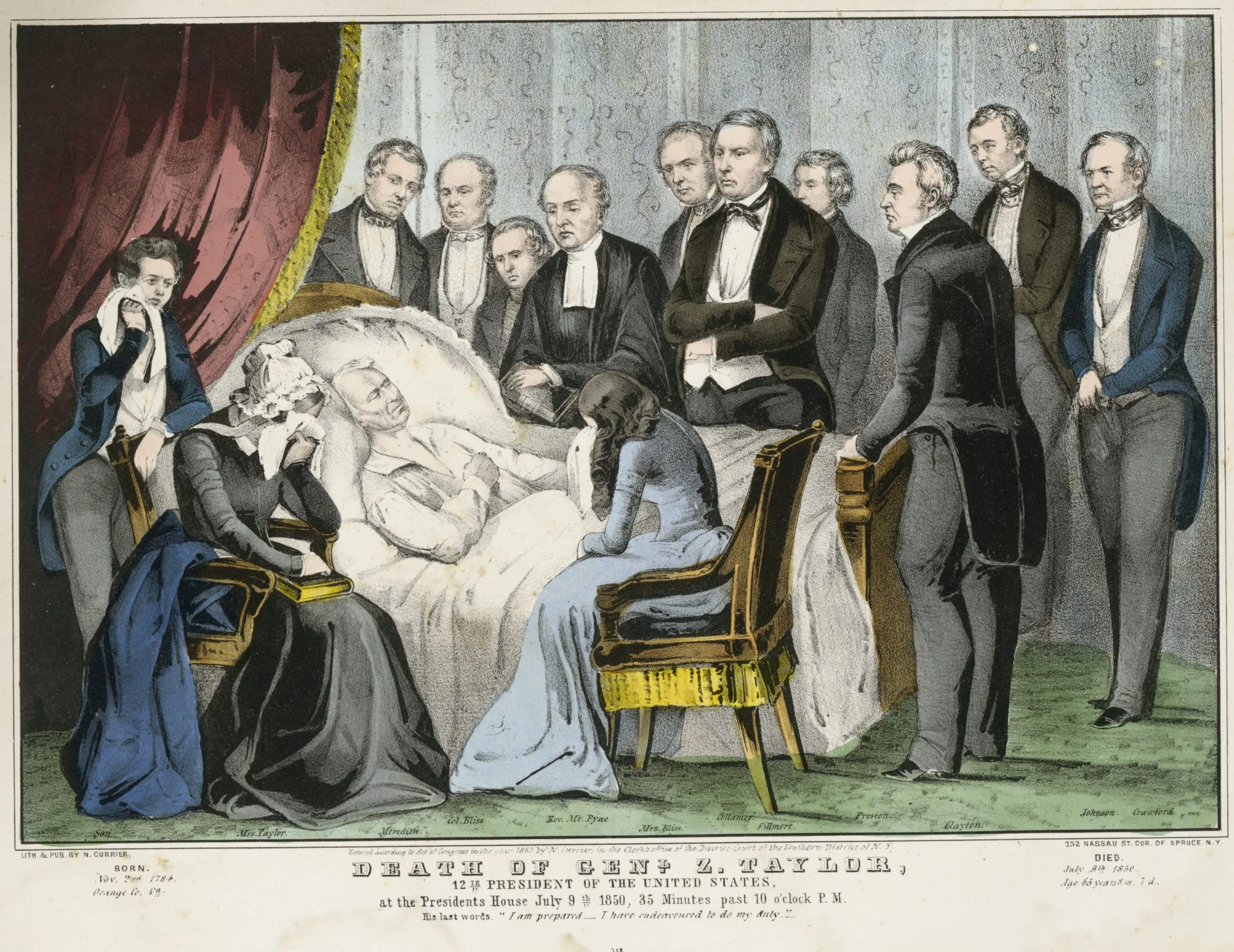
On July 9, 1850, Fillmore was interrupted by a knock at his door. A messenger from the White House broke the news to him: Taylor was dead. But Fillmore knew this was coming. The same day, he'd spent hours in Taylor's sick room. Taylor had first contracted cholera on July 5, and it got worse fast. Knowing he was about to be the president in a time of crisis, Fillmore was unable to sleep that night. Most presidents had months to prepare for their presidency. He only had a single day.
The political crisis was worse than ever. Congress had been so distracted by the issue of slavery that it had accomplished almost nothing in the past seven months. Just a month ago, the aforementioned Nashville Convention had taken place. The Southern delegates chose not to secede and were open to compromise, but it was still concerning that it was even a possibility. Worst of all, a few days prior to Taylor's death, it was reported that Texas would soon send troops to New Mexico to defend its territorial claims. Fillmore planned on supporting New Mexico militarily if he had to, and he urged congress to settle the dispute as soon as possible to avoid war.
Although Fillmore felt slavery was morally evil, he prioritized ending the crisis in any way possible to keep America in one piece. He knew the actions he took had a good chance of turning people against him and dooming his political future. But to him, anything was worth keeping the country together.
But before he could deal with the compromise, something else got in his way. Taylor's cabinet had treated Fillmore extremely poorly throughout the past year, and there was nothing he could do about it. Suddenly, the tables turned. He didn't even have to fire them. They all resigned.
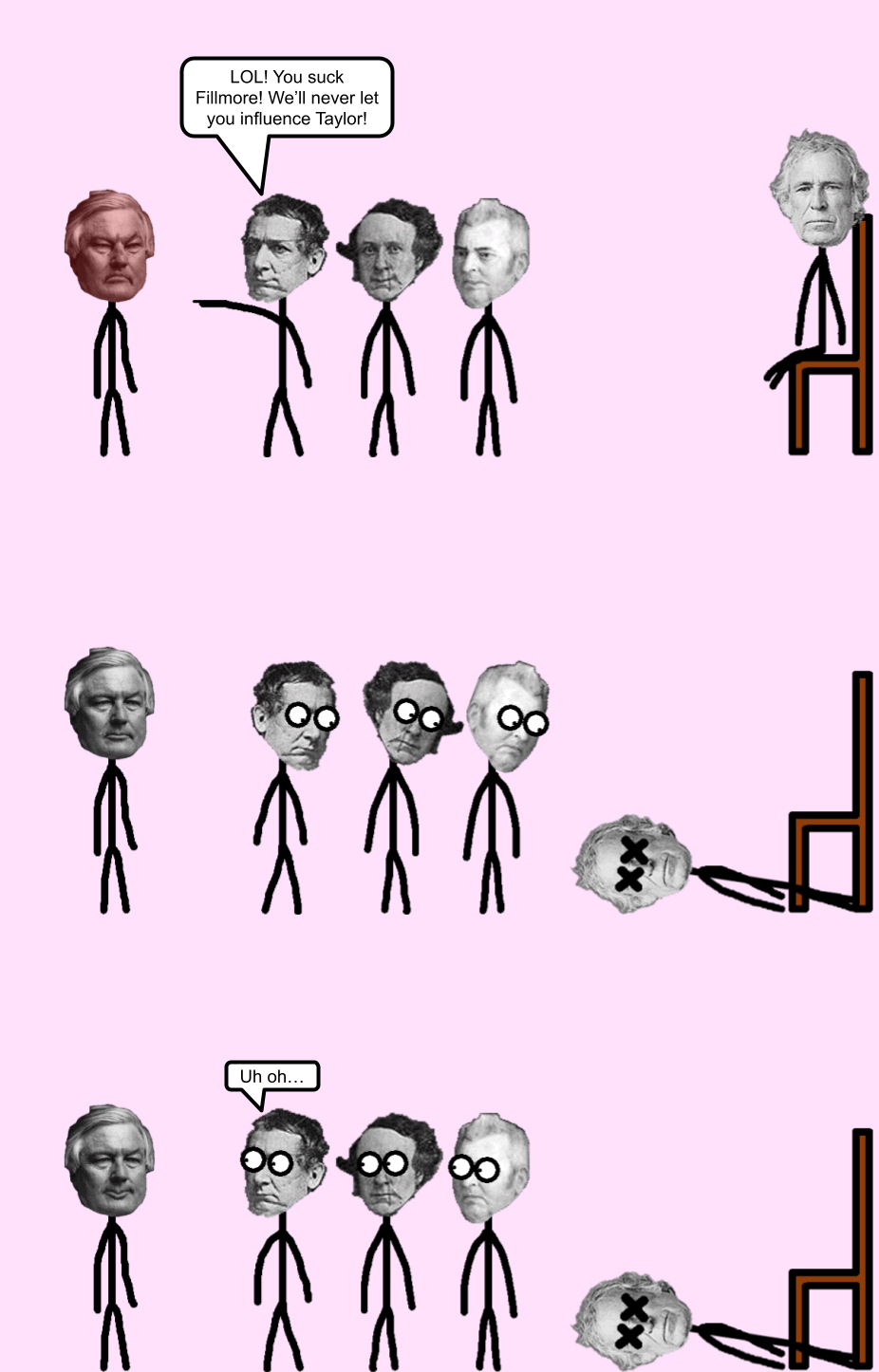
Fillmore wanted Taylor's old cabinet members to stick around for a month so he had time to choose their replacements, but they decided to instead leave after only a week. Suddenly, Fillmore scrambled to assemble a new cabinet as quickly as possible. He had seven positions to fill:
First, Fillmore respected Daniel Webster, and he wanted him to be in his cabinet, so he chose him for his Secretary of State. From there, he worked with Webster to fill the remaining positions. His goal was to recruit Whigs who were in favor of national unity. Here were his picks:
With his cabinet assembled, Fillmore desperately needed to deal with the political crisis at hand. At the time, not many people knew whether Fillmore supported the compromise. After all, he'd basically been on the sidelines the whole time. Fillmore supported whatever was needed to hold the nation together, and he decided he'd sign anything passed by congress.
The Omnibus Bill, which combined every compromise measure into a single bill, seemed like it would finally end the crisis. But then it was changed to postpone the Texas boundary dispute rather than resolve it. Fillmore couldn't afford to wait any longer to settle the boundary, so he hoped congress would undo that change. Instead, it ended up also removing the parts of the bill that dealt with New Mexico and California, leaving only the creation of Utah territory. This neutered bill passed, but it didn't actually solve anything.
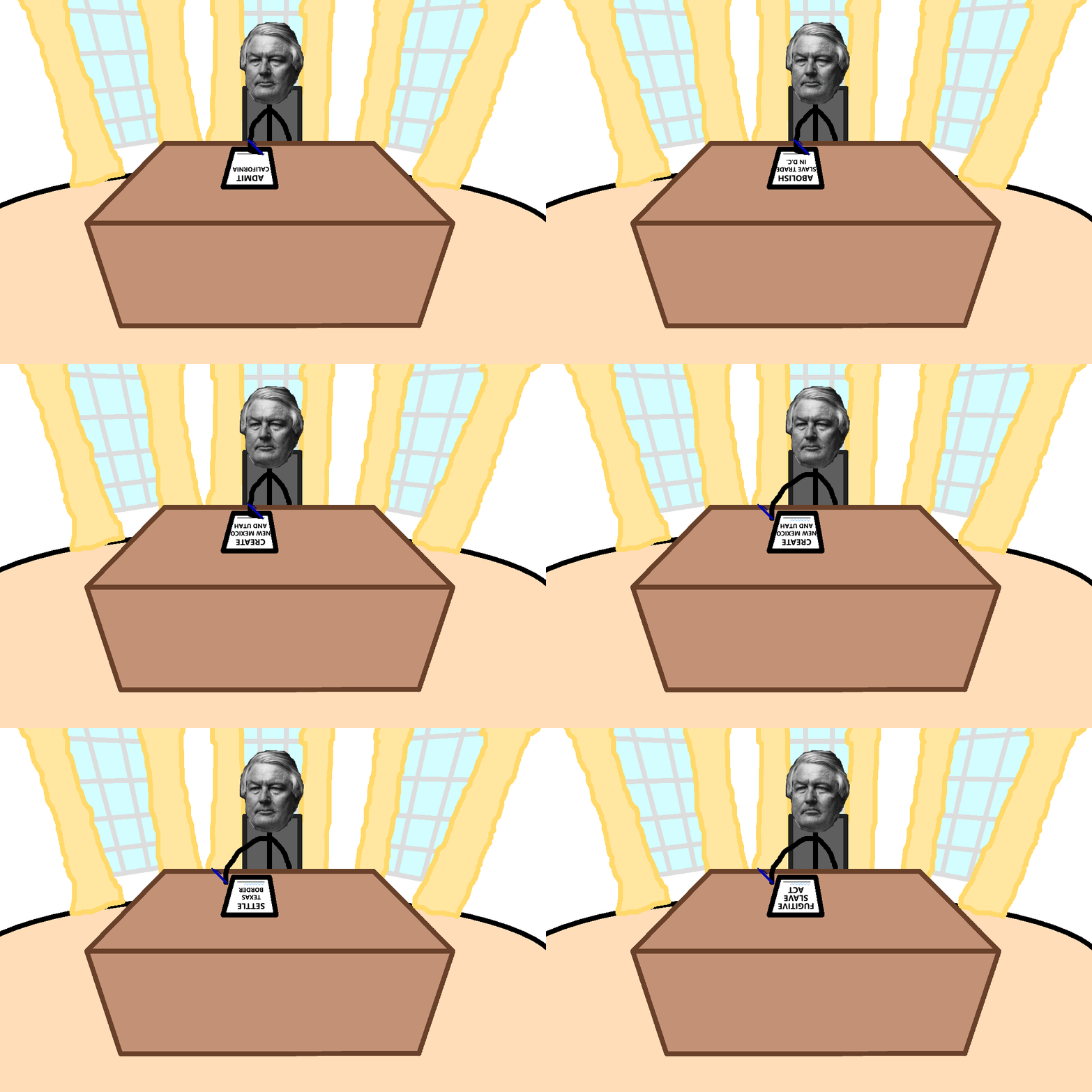
Because the Omnibus Bill failed, Stephen Douglas worked with Fillmore and Webster to create new bills. Instead of trying to combine all of the compromise measures into a single bill again, they decided to separate them into five bills. They created a new bill that settled the Texas boundary dispute. It was more generous to Texas than the Omnibus Bill had been. It still denied Texas of some of the land it wanted, but it also transferred Texas' huge debt over to the federal government. Texas' Senators were satisfied by it, and congress ultimately passed it. Then a California bill was passed, then New Mexico, then fugitive slave measures. Banning the slave trade in Washington, D.C. took longer, but by the middle of September, it finally passed.
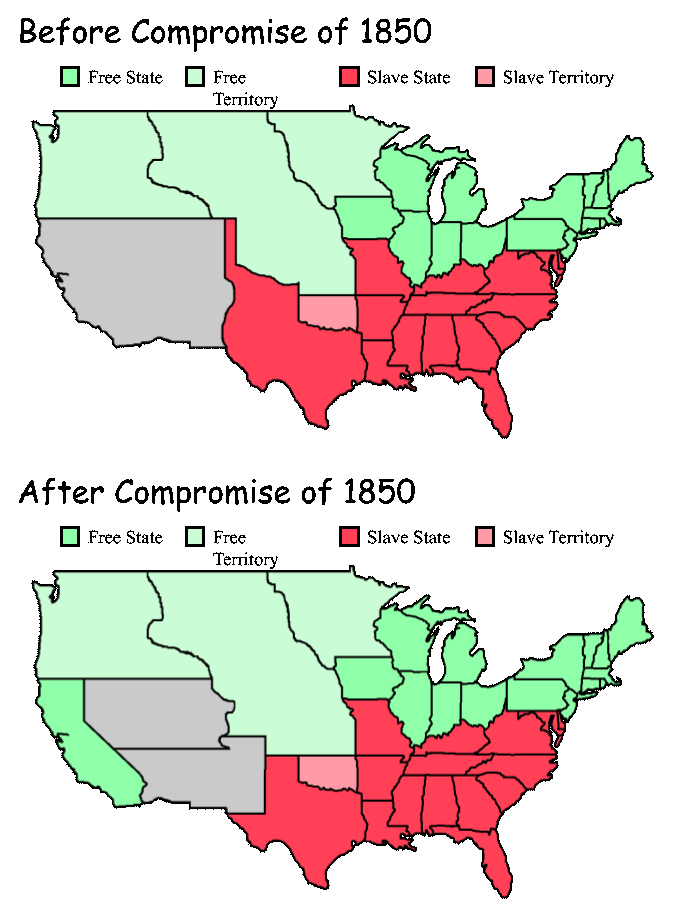
As for Fillmore, he signed all of these bills, and for all but one of them, he did so without hesitation. He hated the Fugitive Slave Act, which ensured the federal government would get involved to return slaves who had escaped from the South. He viewed slavery as morally evil, and he knew abolitionists would forever hate him for signing the bill. But at the end of the day, it was necessary to placate the South to hold the country together, and the constitution specifically required the return of fugitive slaves. After consulting his Attorney General about the constitutionality of the law, he finally signed it.
Since the issue of slavery in the territories was settled for the time being, antislavery agitators stopped talking about free soil and instead complained about the Fugitive Slave Act. As Fillore had anticipated, anti slavery people were already denouncing him for signing it. The thing is, this was not actually America's first fugitive slave act. In 1793, George Washington had signed one, but it required the cooperation of local and state officials. If these officials chose not to aid in the return of escaped slaves, they were effectively free. And in the 1830s and 1840s, abolitionists got laws passed that led to the free states not cooperating, effectively rendering the 1793 law pointless. This is exactly why the South wanted a more powerful law in 1850. The Fugitive Slave Act of 1850 gave power to the federal government to return escaped slaves, meaning the states were no longer able to stop it. This was infuriating to the free states, and just like with the 1793 law, they began to disobey.
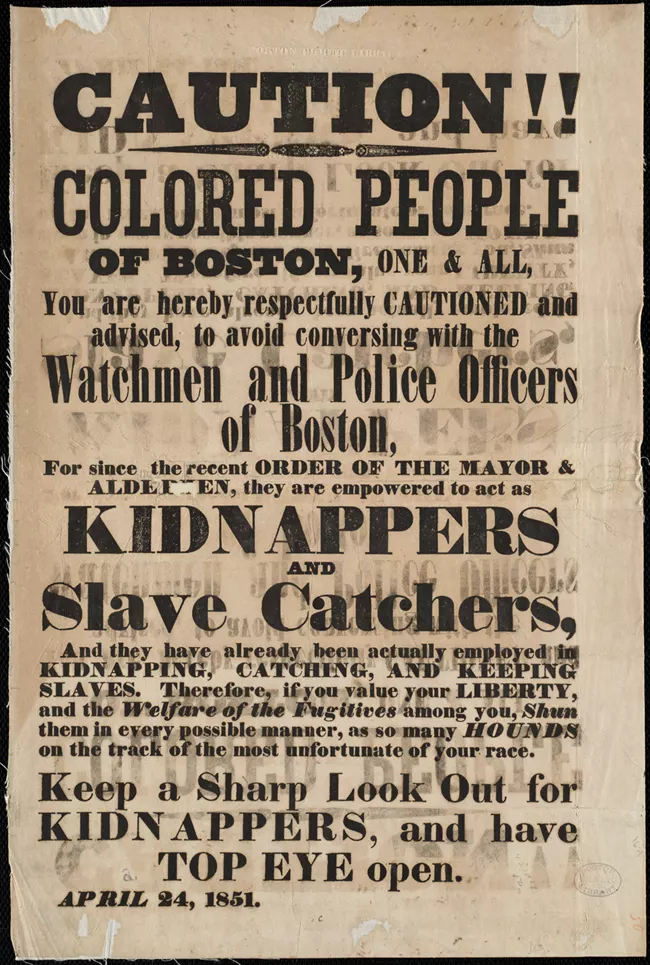
When this defiance happened, Fillmore authorized the use of federal troops to enforce the law, believing that it was the only way to keep America together. After all, many Southerners were just as unhappy about the compromise as Northerners, seeing the new Fugitive Slave Act as the only thing they'd gotten out of it.
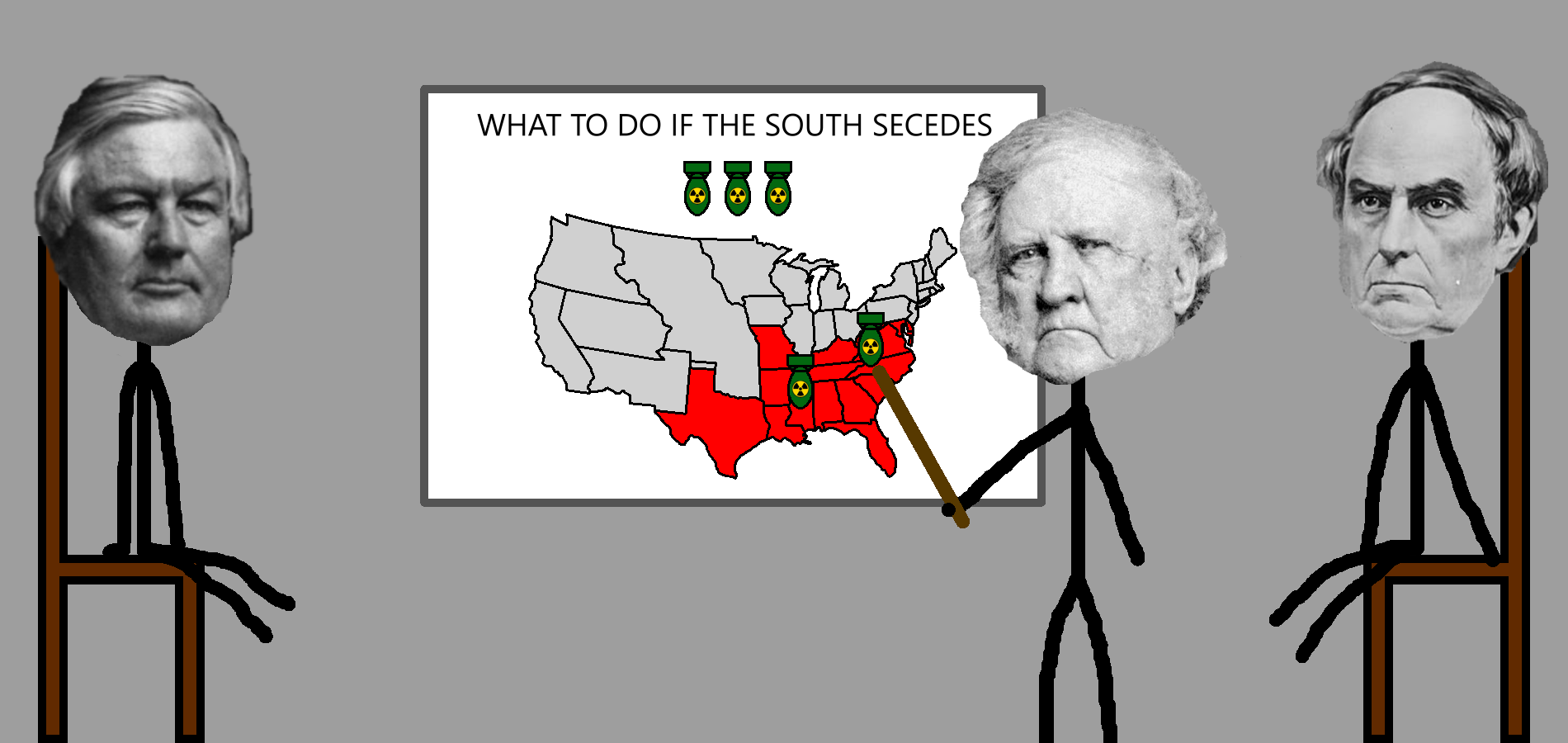
Soon, Southerners called for a second Nashville Convention, and Fillmore heard that secession was once again a possible outcome. He brought General Winfield Scott into his cabinet meetings to prepare. He also had troops sent into the Carolinas in preparation, since South Carolina was considered the most likely state to secede. Georgia was also a source of concern. Prior to the Compromise of 1850, Georgia's legislature announced that if California was admitted as a free state, they would consider it an act of regression and retaliate. Now everyone was wondering what that retaliation would be.
But Southern Whigs helped Fillmore out and discouraged secession. Alexander Stephens and Robert Toombs stumped Georgia and argued that California's admission was fine and that being in the Union was beneficial to Georgia. Then the second Nashville Convention met, and while the delegates condemned the compromise and declared their right to secede, nothing actually came out of it.
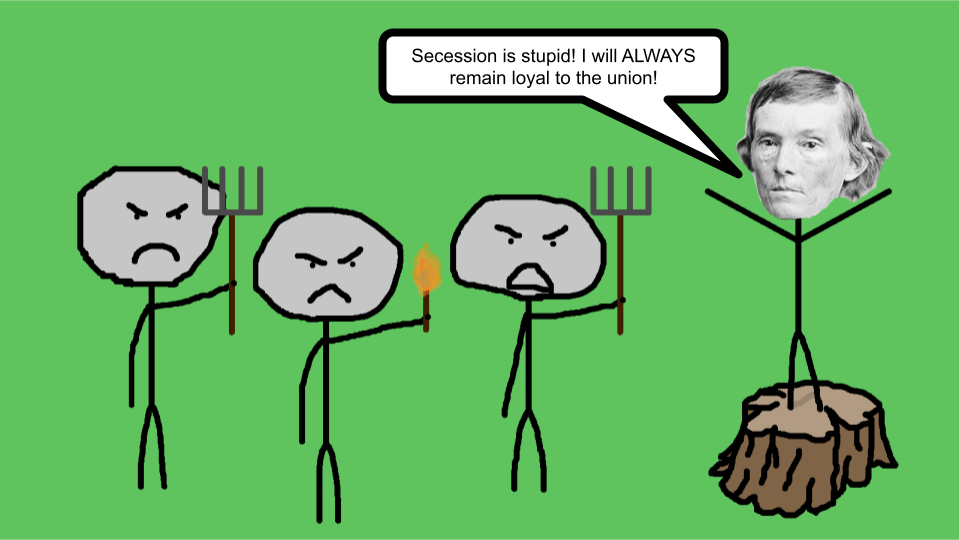
Tensions across the country began to cool down. The secessionists were unable to convince slaveholders that secession was the right move, and Fillmore's protection of the Fugitive Slave Act was part of the reason why. Across the nation, the slavery issue started to fade into the background. It seemed that Fillmore had won. America would stay together.
Part 7 Part 9