 Part 6
Part 8
Part 6
Part 8
As stated earlier, Taylor was a great general, but he didn't actually know much about politics. This was great for Fillmore, as it seemed that Taylor would need his assistance, giving Fillmore a lot of influence. Having a lot of confidence, Fillmore stayed in Albany until his inauguration so he could get things in order since he was leaving his position as comptroller of New York.
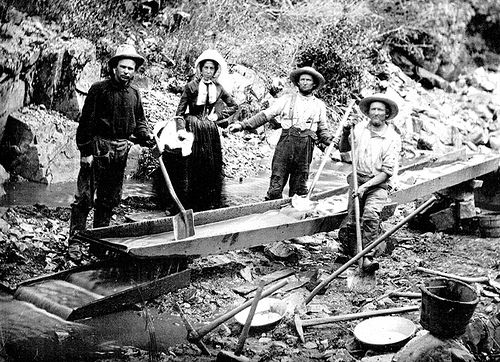
Meanwhile, the Mexican-American War had ended a year prior, and now the United States had a ton of new land to settle, including California and New Mexico. It wasn't long before gold was discovered in California, leading to a massive wave of migration over there. But the area had little government, and congress wanted it to be organized and added as a state as soon as possible. There was only one problem: slavery. California wanted to be admitted as a free state, but many Southerners took serious issue with this.
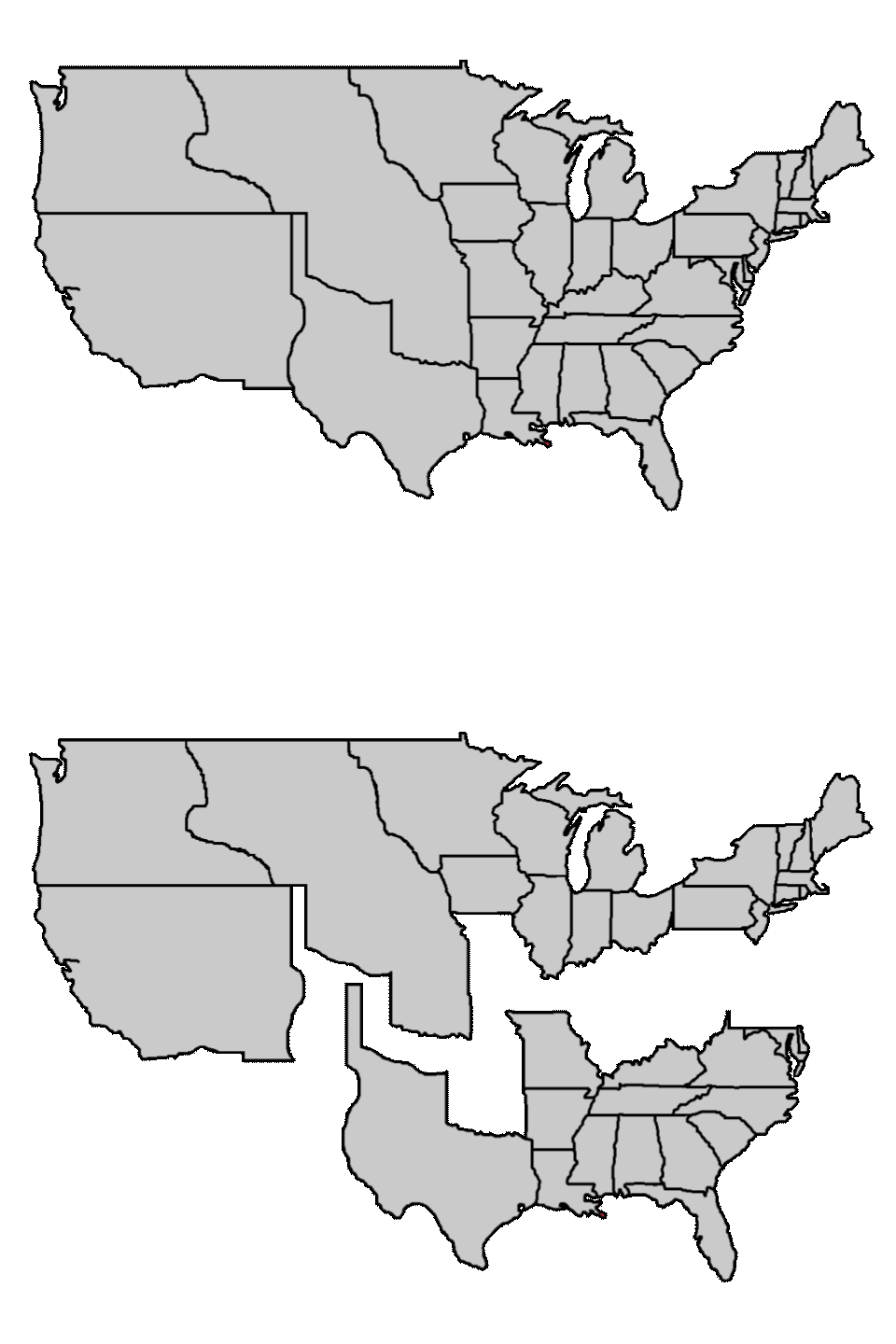
As previously stated, the North had a massive majority over the South in the House of Representatives. What allowed the South to maintain its power was the Senate, which apportions representation equally between the states. Because there was an equal number of free and slave states, the South always had a way to stop anti slavery legislation from being passed. To try and hold the country together, America tended to admit new free and slave states in roughly equal numbers. That way, the North and South would always have equal representation in the Senate, and neither region could dominate the other. This is what made California so important. If California was admitted as a free state, it would upset the balance in the Senate and give the North a majority in both branches of congress. And if free states continued to be admitted without slave states to balance them out, then the North could one day abolish slavery without the approval of any Southern states.

But whether or not California was admitted as a free state was not just in the hands of congress, but also President Taylor. Although Taylor was a Southern slave owner, some members of his cabinet told him not to appeal to Southerners too much. If he wanted to be re-elected in 1852, he was going to need the support of Northern Whigs. And it was because of this that Taylor embraced the idea of popular sovereignty.
Popular sovereignty was the idea that the people living in the new territories, not the federal government, should get to decide whether the territories allowed slavery. It was considered a compromise between the North and the South, since it meant both of them had a chance of getting what they wanted. Many Northern Whigs opposed popular sovereignty, believing slavery should be banned in the territories no matter what. But Southerners tended to oppose it even more. The South's problem with popular sovereignty was that the climate of the new territories was not ideal for slavery. Therefore, it was unlikely that the people living in the territories would vote to allow it. So while popular sovereignty technically gave both sides a chance of getting what they wanted, in reality the North was far more likely to get its way.
Meanwhile, Weed was still trying to regain his influence, and he saw Fillmore as his enemy. He wanted to get Seward appointed as a Senator (At the time, Senators were generally chosen by state legislatures, not by direct elections), but it seemed unlikely due to Seward's poor reputation at the time and the fact that John Collier was running and supported by Fillmore. So Weed, despite plotting to hurt Fillmore, approached him for help. Weed asked for Fillmore to support Seward, and in exchange they would cooperate with him on state and federal patronage. Fillmore knew Weed to be a very cunning and manipulative person, but he let his guard down and agreed to support Seward. Seward won, and the three agreed that when it came to important appointments in New York, they would all consult each other.
It may seem like they were all best friends now, but no. Weed still wanted to hurt Fillmore, so he secretly told Seward to ensure Fillmore would have no control over any appointments in New York. He also told him to try and get Taylor away from Southern influence. Seward's plan was to influence Taylor by befriending his cabinet members. Unfortunately for Fillmore, Taylor did not consult him when choosing his cabinet, giving him little influence over Taylor's cabinet.
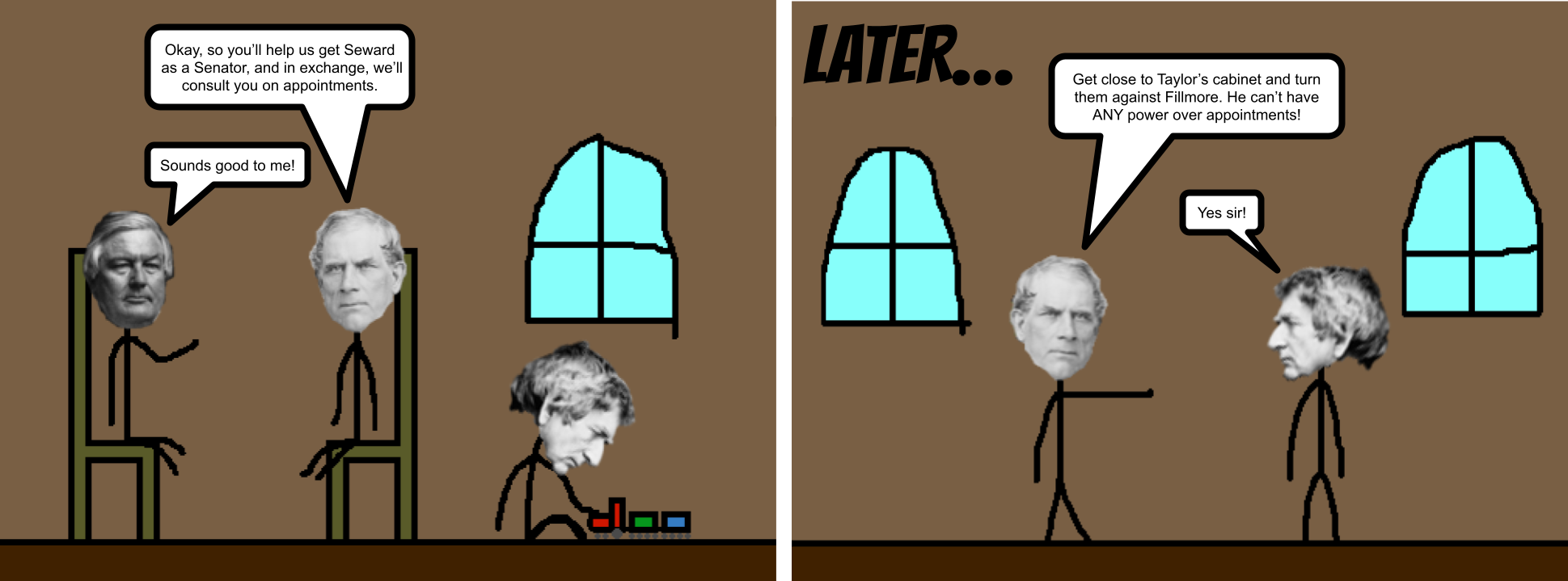
Seward's attempts at befriending Taylor's cabinet succeeded. In New York, this allowed Weed to get the appointments he wanted without the support of Fillmore, who realized that he'd been tricked. Fillmore went to Taylor about this, but Weed also went to Taylor and convinced him to take appointments out of the hands of Seward and Fillmore and instead give responsibility to the governor of New York. Weed won out over Fillmore and was regaining his influence. And this would only become clearer with time.
Soon, when Fillmore recommended John Collier as a New York naval officer, Weed got his way when he supported Philip Hone instead. More and more cases like this were happening, and Weed gave Fillmore a lot of bad press in New York. He even started being influential over Western New York, Fillmore's home region. When Fillmore supported William Ketchum for a position in Buffalo, Weed got his way when he supported Levi Allen, who was illiterate. Weed then bragged that he could run a cow against one of Fillmore's nominees and still win.
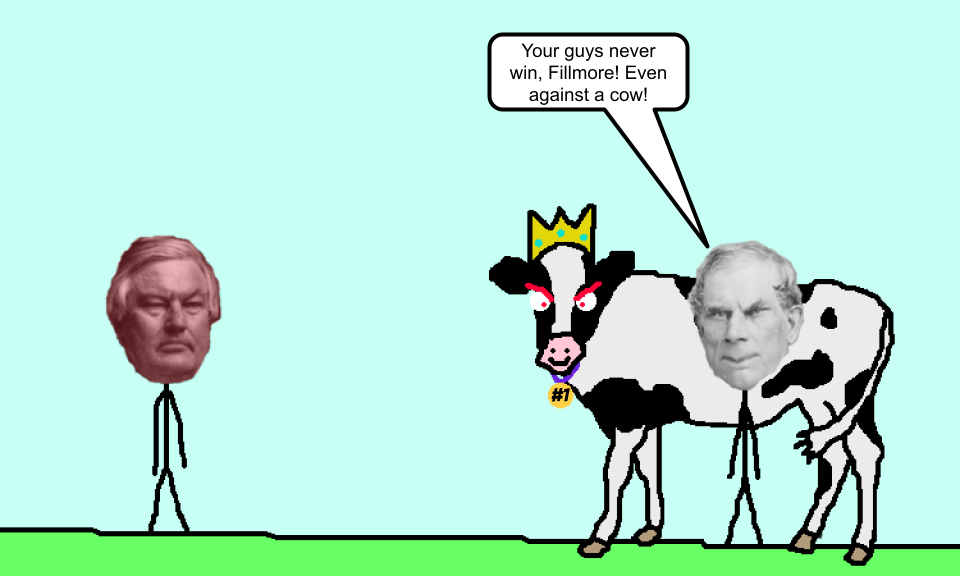
With all of this, it was now clear that Weed was a powerful Whig once again, whereas Fillmore, despite being the Vice President, had actually lost a lot of his power. Many abandoned Fillmore for Weed, hoping that Weed would help them get more power.
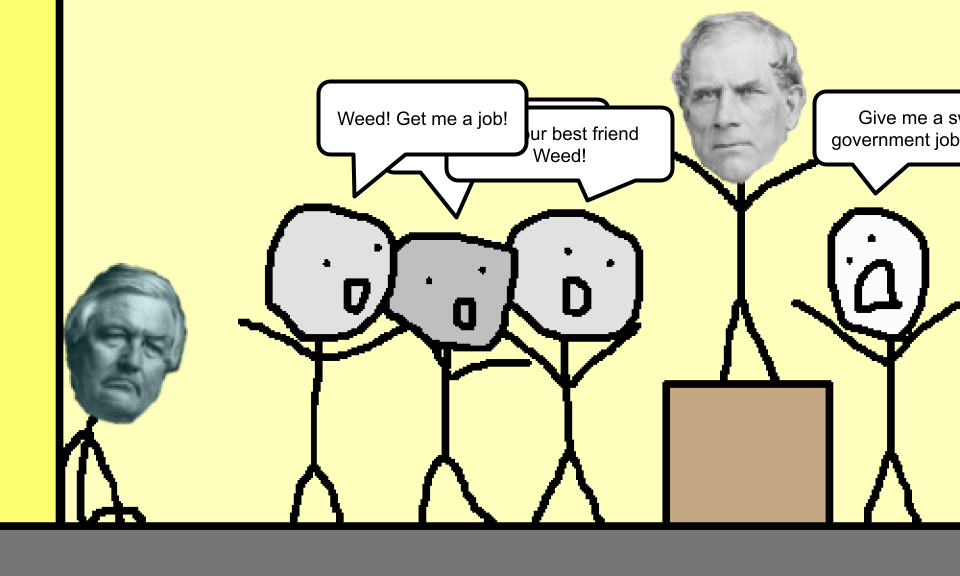
Fillmore was a very weak Vice President and ended up having much less influence over Taylor than Seward or Weed. And the Vice President did almost nothing other than break ties in the Senate, which rarely ended up mattering. Worst of all was his loss of influence over patronage in New York. He approached Taylor and complained, but nothing came out of it. Fillmore found himself watching everything on the sidelines while being unable to do anything himself. This was a massive mistake on Taylor's part. Taylor and Seward did not have experience working with congress like Fillmore did, so Fillmore would have arguably been much more helpful to Taylor than Seward in navigating the political crisis surrounding California. And the political crisis was starting to get really, really bad.
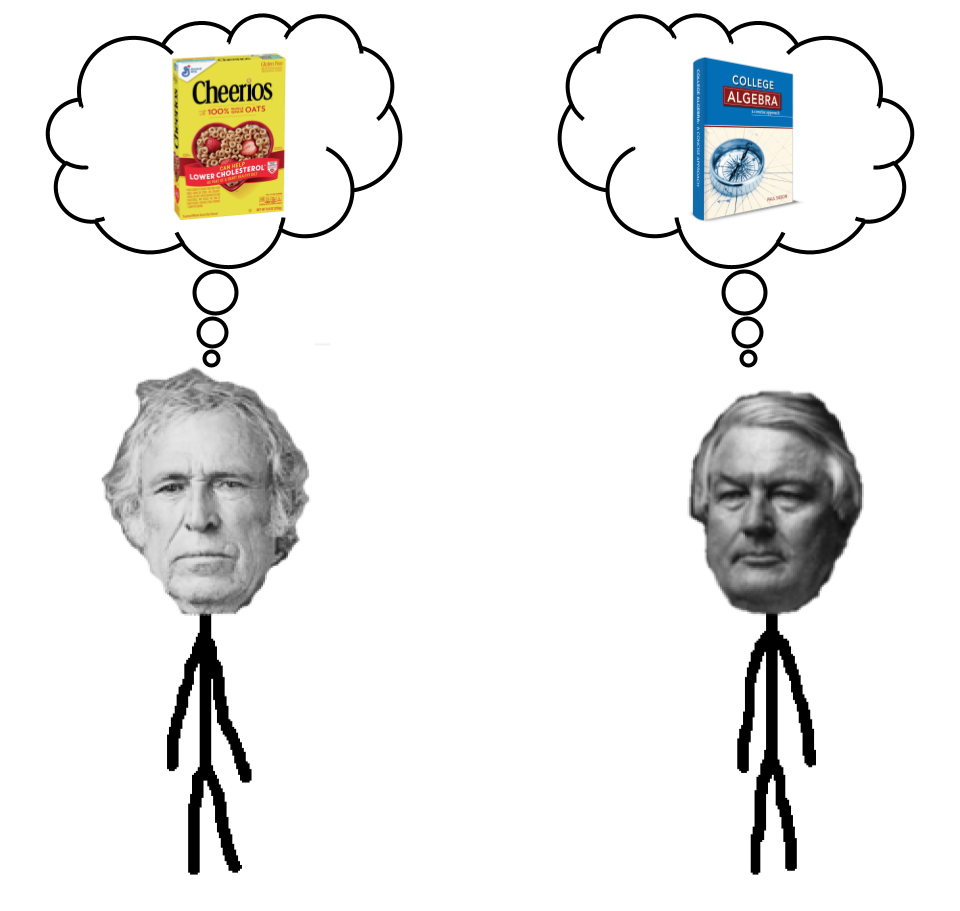
Congress could still not decide on what an acceptable government for the Southwestern territories could be. They needed a solution to whether slavery would be legal in the territories. Congress ended up being split into three factions that were divided more by region than by party. The first faction favored Southern pro-slavery interests. The second favored Northern anti-slavery interests. And the third faction, which contained both Northeners and Southerners, was divided and willing to compromise. This third faction was called the "Nationals".
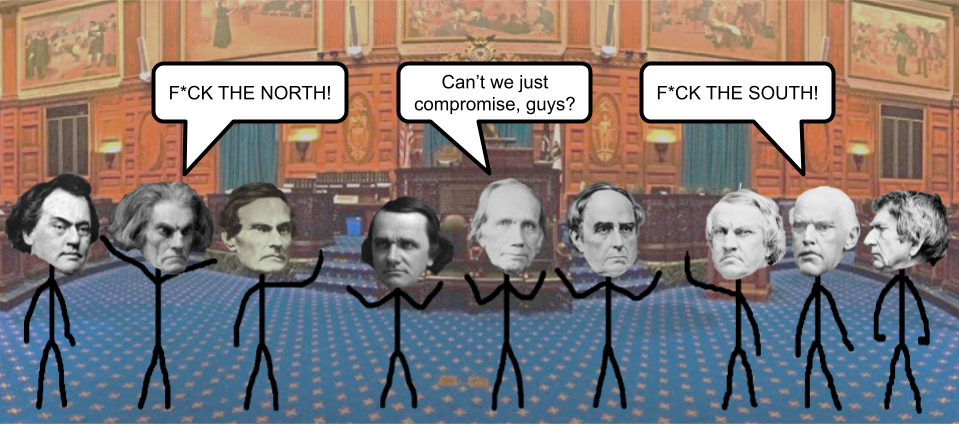
Taylor refused to make compromises with the South despite the fact that the Democrats controlled congress. His plan was to admit the territories of California and New Mexico as states as soon as possible so they could decide the issue of slavery for themselves. The Southern faction of congress grew to heavily oppose Taylor, with some suspecting that he had a connection to Seward. But he had the support of much of the Northern faction, and if he could get enough support from the National faction, he might be able to get his plan passed.
Taylor knew that National Whigs would probably support the plan, and even some National Democrats would likely support it, as they tended to support popular sovereignty. It may seem like he had a very solid plan, but it wasn't so simple in reality. The Southern faction had a lot of influence over the Southern Nationals, and those Nationals, despite supporting popular sovereignty, did not want to be smeared as traitors to their region. Even worse, the Southern faction was willing to do almost anything to stop Taylor's plan, including threatening to secede from the union altogether. In fact, in less than half a year, a convention of Southern states was going to meet in Nashville where it was possible that they would try to secede from the union and form a new nation.
Because of this, before the Nationals would support Taylor's plan, they needed some compromises. Figures like Henry Foote, John Bell, and Henry Clay all came up with their own ideas. It was Clay's plan that seemed to have the most potential. It was made up of 5 points:
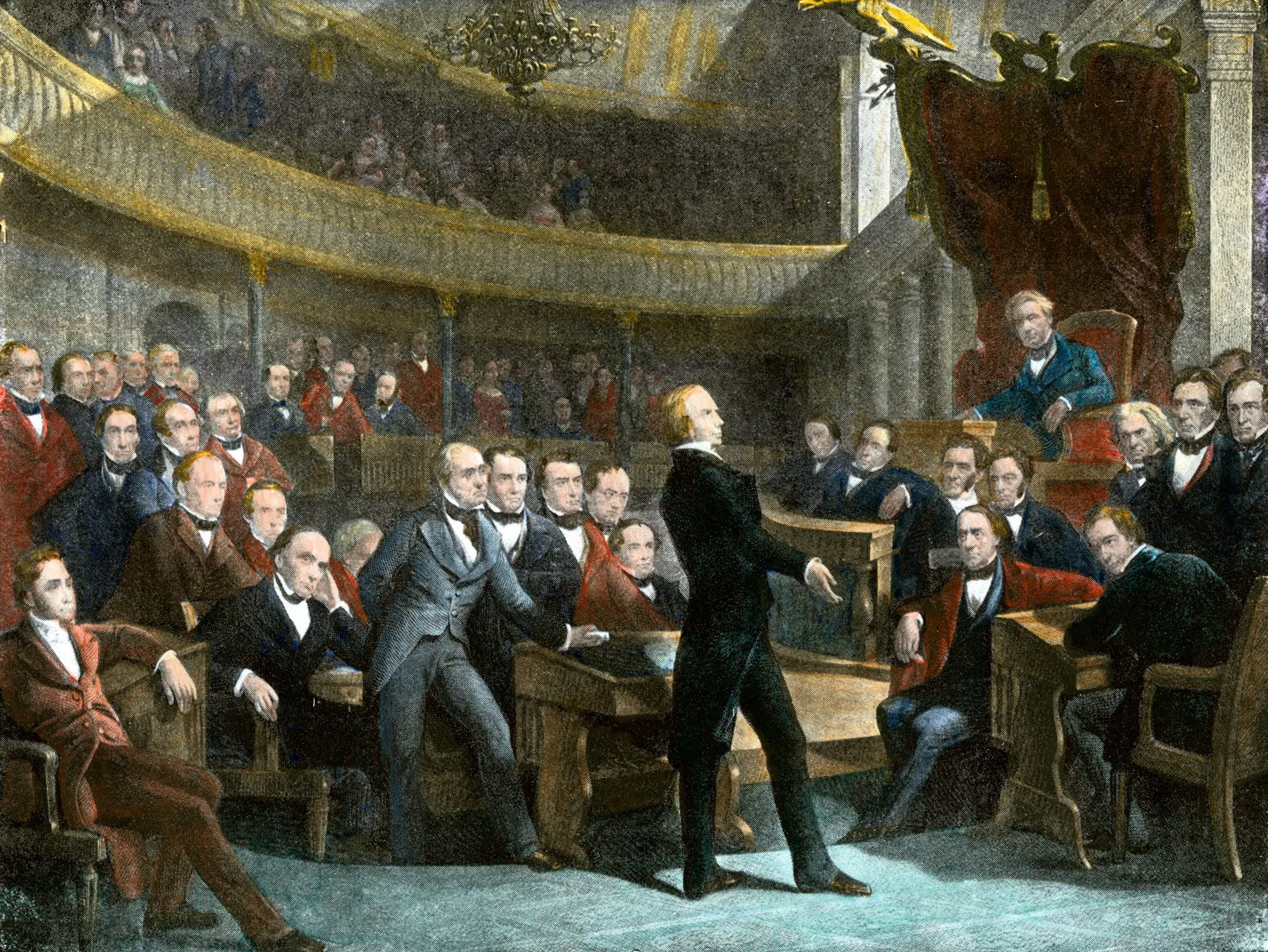
Clay's measures were also supported by Stephen Douglas, who helped behind the scenes and negotiated with people to get them to support the compromise. Ultimately, Clay and Douglas relied primarily on Nationals for support, and hoped on convincing a few of the radicals along the way, whereas Taylor relied on the radical Northerners for support and hoped to convince a few Nationals along the way.
Daniel Webster made a speech speaking out in favor of Clay's plan. He said that secession was unacceptable and concessions had to be made. And it was better for the North to make concessions. The North was superior to the South economically, and this would only become clearer with time as the North continued to industrialize. He assured abolitionists that popular sovereignty would not lead to the expansion of slavery because the land of the territories was not good for it. Slavery was doomed in the long term, so it was best to just let it die naturally. Therefore, Clay's plan was best for the country. Fillmore loved this speech and completely agreed with it, but he still said nothing, not wanting to seem disloyal to Taylor.
By May of 1850, people really just wanted a compromise, but the order that the compromise measures were passed in was important. Many wanted California admitted as a state before looking at any other proposal. Southern Nationals were suspicious of this idea, however, because they felt that once congress admitted California, Northern Nationals would be too scared to give any concessions to the South. Taylor wasn't helping the situation, refusing to accept any changes to his plan.
All of this seemed to be remedied when Senator Foote proposed the idea of an "Omnibus Bill" which would combine all 5 compromise measures into a single bill. It seemed to work well because it fixed the ordering problem and it forced people to compromise. In order to get what they wanted, people would have to accept the things they didn't want.
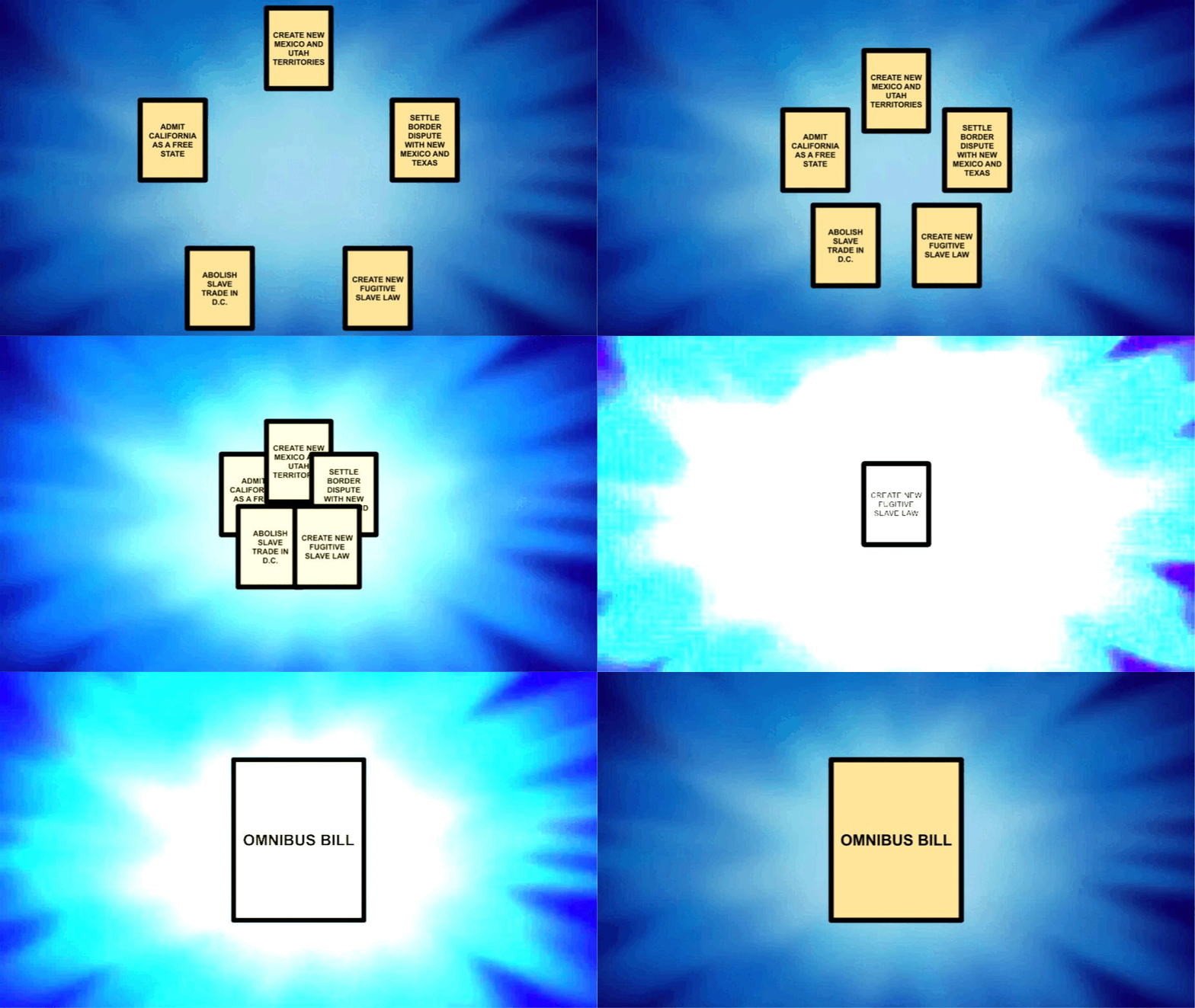
The bill was assembled, and it was clear that the vote was gonna be close. It would have to clear both the House and the Senate, and it seemed possible that Taylor would veto it in favor of his own plan. Attention turned to Fillmore, as there was a real possibility that the vote would come down to a tie in the Senate. A tie that Fillmore would have to break.
Fillmore supported the compromise, but he'd kept quiet about it until this point. He soon visited Taylor and said that if he was forced to be the tie breaker, he might vote in favor of the compromise. But Fillmore didn't have to break the tie because soon he wouldn't even be the Vice President. Taylor died.
Part 6 Part 8